Deanna Wong, owner of DeLab Consulting in Hong Kong, agreed with Roda. “There is a lack of widespread discussion in the area,” she said, “especially in Asia.”
Another reason for IP’s absence in financial reports is the lack of regulatory or mandatory IP disclosure requirements.
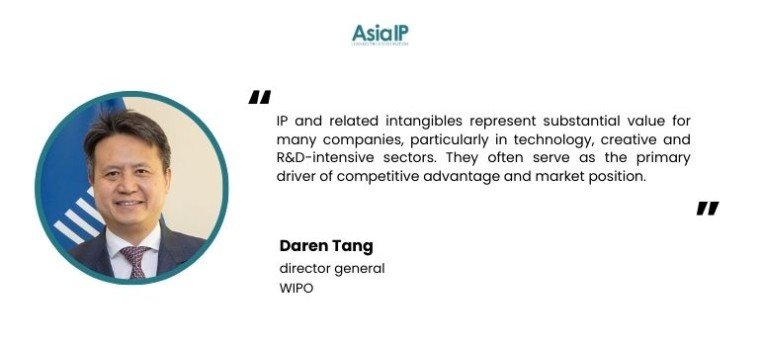
The problem also lies in standard accounting itself. “Traditional accounting was built for an age where value resided in factories and inventory – assets you could touch, count and verify,” Tang explained.
“IP, especially when created internally, doesn’t slot easily into those systems,” Sabharwal pointed out. “It doesn’t always have a defined cost; its future income is uncertain, and its value often depends on context, not just ownership. A trademark might be invaluable to one business and virtually meaningless to another.”
According to Wong, the strict requirements such as identifiability, separability and reliable measurements cause professional service providers and accounting rules to be resistant to change, thus preventing the recognition of intangible assets. “[This is] because there are no real standards or objective methods to provide fixed valuation, even if certified evaluators are used. Further, as secondary markets for IP assets are often subjective, at times inactive, it means it is difficult to assign consistent or reliable monetary value to intangibles,” Wong explained.
Because of this variability, regulators and auditors have traditionally hesitated to include internally generated IP on balance sheets, thus leaving out a substantial portion of corporate value in financial reporting. Oftentimes, this portion is the most important.
Additionally, the under-reporting of IP may also be attributed to the highly sensitive nature of the subject matter in competitive industries. Disclosing IP information may lead to risks.
How then should this gaping hole in financial reports be plugged?
According to Sabharwal, accounting standards should first evolve to accommodate IP and other intangible assets. “The reality is that not all valuable assets are bought or built in a factory,” she remarked.
She added that the International Accounting Standards Board, Financial Accounting Standards Board and other such institutions must work towards guidance that allows internally developed IP to be reported. Ownership, commercial potential and reliability of valuation must be established in such reporting.
The International Valuation Standards Council and other internationally recognized bodies must also help develop more adaptive and sector-specific frameworks.
“Uniform formulas don’t work across the board. What holds for a copyright in the media industry might not work for a semiconductor patent,” Sabharwal explained.