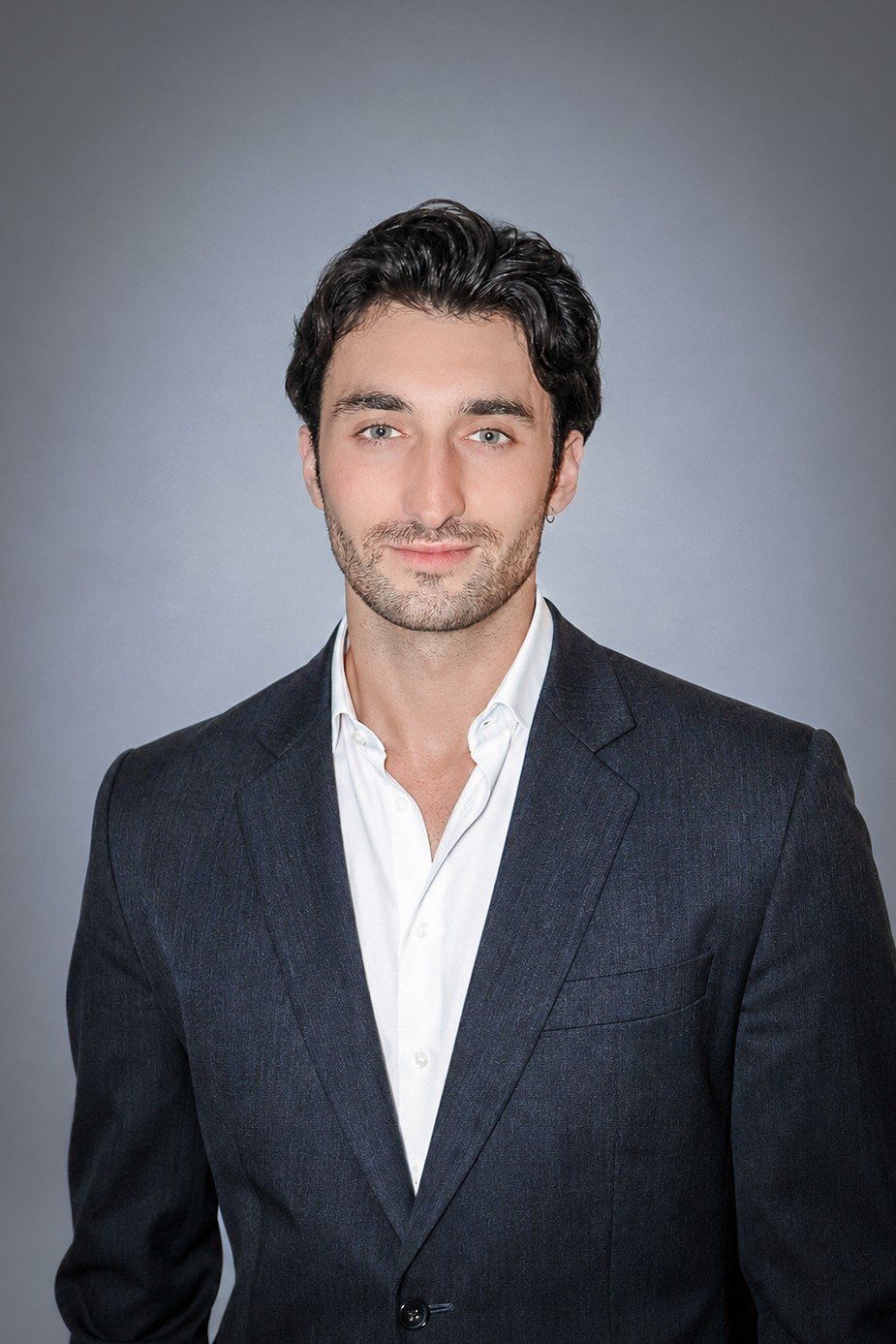
For Mathis Voche, a legal counsel in French and U.S. entertainment law and founder of Atom Talent Management in New York City, this is a genuinely significant event, but not for the reasons put forward in the press release.
“It’s the MPA’s first formal AI agreement with a model developer, and the counterparty isn’t a Californian startup but a Chinese company,” he said. “From a practical perspective, such a framework is worth more to Hollywood than a judgment against a developer with no assets in the United States. From a legal perspective, however, one has to read the agreement for what it is. What has been made public deals with what the models are allowed to produce, and says nothing about the data the models were trained on, which was precisely the heart of the February letters. No financial terms, no licence of any film library, no audit mechanism and no technical protocol have been disclosed. This is a truce, not a licensing deal, and it was signed by the MPA, not by the studios themselves, which consequently keep every individual claim they may have against ByteDance.”
Voche noted that the timing is telling as well. “Ten days before the announcement, researchers were still generating Elsa and Shrek with Seedream 5.0 through a third-party API, and a partner at Andreessen Horowitz was posting a bootleg scene from The Office made with MiniMax’s Hailuo. The deal wasn’t signed because the problem had been solved but because a managed relationship was simply better than an open war for both sides – ByteDance because it needs the American market and cannot afford a Midjourney-style lawsuit on top of its TikTok saga, and the studios because suing a Beijing-headquartered company means years of procedure with an uncertain outcome.”
Setting a new standard for AI copyright safeguards?
Could the deal set a new standard for AI copyright safeguards? Voche said the answer is conditional. “On the technical side, yes, I do think the package ByteDance announced on its own in March 2026 will become the entry ticket for any generative video or image model wishing to operate in Western markets, namely filters against real faces and recognizable copyrighted characters, visible and invisible watermarks, C2PA content credentials and a commitment to monitor infringing uses.”
“None of this is new in isolation, as OpenAI had already walked back its opt-out approach to copyrighted characters within days of Sora 2’s launch in September 2025, promising rights holders more granular controls modelled in part on its opt-in approach to likeness.” What is new, Voche pointed out, is that a trade body now endorses those measures in a bilateral instrument with a major developer, which turns “best practices” into something much closer to a contractual expectation.
“On the legal side, I would be careful with the word ‘standard’,” he said. “A memorandum of understanding is by nature a soft instrument, and nothing disclosed so far mentions penalties, third-party audits or any dispute resolution mechanism, so that a standard nobody can verify is essentially a statement of intent. More fundamentally, the agreement is silent on the input side, and the question of whether training a model on copyrighted films without authorization is lawful is being decided elsewhere.”
“In California, Disney, Universal and Warner Bros. Discovery are facing Midjourney’s fair use defence and survived MiniMax’s motion to dismiss in May 2026, the court notably accepting, at this preliminary stage, that a Shanghai company’s trademark filings in the U.S. could suffice for a prima facie showing of jurisdiction, while the broader case law remains split, from Bartz v. Anthropic and Kadrey v. Meta in June 2025, which accepted training as fair use in principle while leaving the piracy of the source material exposed, to the Munich Regional Court in GEMA v. OpenAI in November 2025, which held that the memorization and reproduction of protected lyrics infringed copyright. The ByteDance framework takes no position on any of this, and it obviously couldn’t while those cases are pending.”
The actual standards, Voche thinks, are being written by legislators around the world. The ByteDance deal sits inside that architecture rather than replacing it.
In the U.S., the NO FAKES Act of 2026 was advanced by the Senate Judiciary Committee by voice vote on June 18, 2026 and would create a federal digital replica right, but it isn’t law yet.
In the European Union, the AI Act obligations for general-purpose models, including a public summary of training data, have applied since August 2, 2025, with enforcement powers in force since August 2, 2026. In China, mandatory labelling of AI-generated content has been in force since September 1, 2025.
The MPA and ByteDance have merely anticipated, privately, what these regulatory regimes are converging on. But the durable standard will be the one in the statute books, not the one in the press release.
Collaboration between AI firms and rights holders
According to Voche, this deal could encourage more collaboration between AI firms and rights holders, and the trend was already there before ByteDance signed.
Over the previous year, several major disputes between rights holders and AI developers have ended in some form of negotiated resolution: Universal Music settled with Udio in October 2025, and Warner Music settled with both Udio and Suno the following month, converting lawsuits into licensed, opt-in models, even though Universal and Sony are still fighting Suno in Massachusetts.
Disney, meanwhile, announced in December 2025 plans for a three-year licensing agreement with OpenAI, alongside a US$1 billion equity investment in the company, involving more than 200 characters from Disney, Marvel, Pixar and Star Wars for Sora. Sora was subsequently discontinued on April 26, 2026.
Sue or threaten to sue, obtain guardrails, then license. For Voche, the ByteDance framework is the first step of that sequence for video, and ByteDance’s cloud arm Volcano Engine had already taken the second one in China in June 2026, with Stephen Chow’s Bingo Group, allowing users to generate content from Chow’s licensed films.
He said: “The more interesting question, to me, is why the studios chose to talk to ByteDance while they are suing Midjourney and MiniMax. First, leverage. ByteDance has substantial American operations and cannot ignore Hollywood the way a smaller Chinese developer with no U.S. assets can. Second, business, as TikTok and CapCut are where trailers, clips and fan content live today. Third, and this is where I suspect a certain discretion on the studios’ part, they are themselves building and using generative models, which is exactly what Midjourney sought to explore in discovery.”
In June 2026, a magistrate judge allowed part of the discovery request concerning the studios’ use of generative AI but rejected the broader requests as irrelevant or protected work product, a ruling Midjourney has asked the district judge to revisit. Output-side deals conveniently allow everyone to avoid that conversation.
“So yes, collaboration will increase, but under constraint rather than as the beginning of a beautiful friendship,” said Voche. “The Disney and OpenAI episode reminds us how fragile these arrangements are, as OpenAI announced the end of Sora on March 24, 2026 and closed the app on April 26, barely four months after the partnership had been announced. The guardrails are arguably the easy part. The hard part is drafting a licence that survives the disappearance of the product it was written for and addresses the training data question expressly rather than deferring it in silence.”
Legal risks
What legal risks remain despite these safeguards? “More than the announcement suggests, starting with training,” Voche noted. “If Seedance and Seedream were built on the studios’ catalogues without authorization, output filters don’t cure that. In the U.S., the answer depends on fair use, which today varies with the judge and the way the data was acquired. In Europe, it will depend on whether the rights holder reserved its rights against text and data mining under the 2019 Copyright Directive. In China, the Hangzhou courts signalled in the Ultraman cases a lenient standard for the training phase while holding the platform liable for infringing outputs. A single model distributed worldwide is consequently exposed to diverging answers to the same question, and any studio can still sue on any of them.”
The second risk is leakage. “Filters have repeatedly been circumvented by determined users, producing what the industry now calls ‘likeness-adjacent’ outputs, unmistakable without being direct reproductions. A court that finds a character ‘sufficiently distinctive’, as the MiniMax court did for numerous Disney and Warner characters, will not be impressed by the argument that the filter was supposed to catch it.”
The third risk concerns performers, which Voche considers the most troubling gap in the agreement. “The MPA represents studios, not Brad Pitt, Tom Cruise or the thousands of SAG-AFTRA members whose faces and voices were the actual subject of the February scandal. The framework mentions likeness, but a performer’s ability to enforce it is anything but clear. Until the NO FAKES Act becomes law, American protection against digital replicas remains a patchwork of state statutes, and the SAG-AFTRA agreements bind studios, not ByteDance. Music offers a warning here, as the American Federation of Musicians sued Universal, Warner Records and Atlantic in June 2026 for licensing recordings to Suno and Udio without compensating the musicians who played on them, as their collective bargaining agreement allegedly required.”
He added that an actor whose likeness slips through a filter in 2027 will have to build his case from scratch.
The fourth risk is enforceability, which cuts both ways. “The MPA has no statutory power, the framework has no disclosed sanctions, and the counterparty is headquartered in Beijing, so that if ByteDance were to quietly loosen a filter to keep pace with Kling or Hailuo, the first remedy would be a conversation rather than an injunction. On the studios’ own side, Midjourney’s defence rests in part on the claim that Hollywood itself trains AI systems on copyrighted material and therefore cannot complain, and with some discovery into the studios’ own AI use now allowed, the issue is hardly going away. An industry that sets the standard for AI safeguards will be held to it. None of this makes the August agreement a bad one, and it must be read as sensible risk management on both sides, but a beginning, not a settlement. The real test will come the next time a two-line prompt produces a scene worthy of a Hollywood lot, and we find out whether the guardrails hold and who pays if they don’t.”
- Excel V. Dyquiangco