

INTA 2026: Lawyers urge companies to align trademarks, patents and their brands
06 May 2026
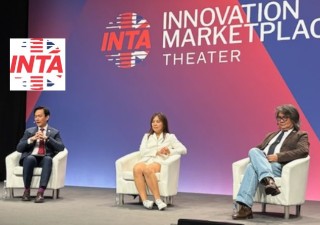
A panel of senior in‑house and private practice intellectual property lawyers told an audience at this year’s International Trademark Association 148th Annual Meeting at Excel London that trademarks and patents are no longer parallel tracks but strategic partners in building consumer‑facing brands – and that alignment must begin at the earliest stages of product development.
The session, moderated by Rachna Bakhru, a partner at RNA, Technology, and IP Attorneys in Gurugram, brought together Christopher George, director of trademarks and brand identity at Intel; Cynthia McCaskill, deputy general counsel for engineering at GE Aerospace; and Conor McLaughlin, legal director at law firm Mishcon de Reya in London.
McLaughlin urged startups to think about IP holistically from day one. “Startups are going to be wanting to consider protecting all those assets, and equally, ensuring that they have freedom to operate at the point of launch,” he told the audience, stressing that investors expect a clear IP roadmap during due diligence. The panel repeatedly returned to the same theme: “always and repeatedly” consider patents and trademarks across the product lifecycle.
McCaskill reinforced that message with a practical warning: patent filings must precede public disclosure if rights are to be preserved. She recommended mapping customer value drivers to patent filings and then handing those attributes to brand teams to turn into marketable messages. “We want patents to be kind of a beachhead,” she said, describing patents as the legal foundation that marketing can leverage to build long‑term consumer trust.
Panelists used Intel’s “Intel Inside” campaign as a textbook example of successful ingredient branding. George explained that in Intel’s early years, patents drove product demand, but as competition intensified the company shifted to making the processor itself a consumer-facing reason to buy. The result was a decades-long programme that taught consumers to care about what was “inside” their PCs – a strategy that boosted OEM sales and created durable brand equity.
Yet the panel cautioned that Intel’s path is hard to replicate today. George noted that in many modern markets – particularly AI platforms and fast‑moving software – technology differences are smaller and change faster, so patents alone rarely create a lasting consumer distinction. Instead, he argued, branding and narrative must support patented features to make them meaningful to end users.
The discussion also highlighted the role of design patents and trade dress in signaling product quality. McCaskill pointed out that ornamental design protection can be an important complement to utility patents where visual identity or product form factors matter to consumers. The panel referenced examples ranging from hand‑dryers to vacuum cleaners where design and branding preserved market leadership long after patents expired.
George added that sensory trademarks – such as Intel’s five‑note “bong” – can be protected and used to reinforce ingredient branding across partners and OEMs, creating a multi-sensory trade dress that consumers recognize.
Despite consensus on strategy, panellists acknowledged persistent organizational barriers. Engineering, marketing, sales and legal often operate at different speeds and with different priorities. Sales teams, in particular, can push products to market faster than patents can be filed or brand campaigns can be finalized, creating tension that requires pre‑emptive policy and cross‑functional processes.
Panelists offered concrete takeaways for smaller companies and in‑house teams:
Start early. “I say it’s from the beginning,” McCaskill said, urging companies to plan marketing and IP strategies from product inception so brand equity can be built before patents expire.
Be strategic, not exhaustive. McLaughlin advised startups to identify core assets and prioritize filings rather than attempting to patent or trademark everything at once.
Create cross‑functional processes. All of the panelists urged companies to adopt policies that force collaboration between patent, trademark, engineering, marketing and sales, even if such collaboration might not be easy.
“In my office, the patent and trademark teams sit next to each other, but the brands team has this kind of phobia about patents,” said Bakhru. “They say, technically, we don't understand patents, despite [the patents teams] giving several training sessions to them. And similarly, the patents team feels that trademarks are so complicated.
George provided an important a practical tip for entrepreneurs: “You don’t have to trademark everything all over the world, but even for startups, get something on file.” He framed a broad trademark filing as inexpensive insurance that preserves options and prevents being blocked in key markets.
- Gregory Glass in London.