Please wait while the page is loading...

loader

How Pop Mart turned toys into gold

15 September 2025

A line of collectible plush toys created by a Hong Kong Illustrator has taken the world by storm. Cathy Li explains how the bunny-eared elf figure named Labubu has become the hottest status symbol of 2025. 


A near 400 percent increase in profits, revenue soaring past Rmb13 billion (US$1.8 billion) and a vinyl toy that auctioned for the price of a luxury sports car. In 2025, the hottest flex isn’t your handbag – it’s what’s dangling from it. 

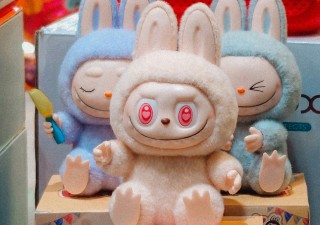
Meet Labubu, a bunny-eared elf toy made by Chinese company Pop Mart, has gone viral for over a year since 2024. Endorsed by celebrities including Rihanna and Lisa from Blackpink, the “ugly-cute” toy has become so popular that Pop Mart paused sales in the United Kingdom in May, after fights and safety concerns in stores. Official versions in China sell for between Rmb99 (US$14) and Rmb399 (US$56), with resale prices climbing significantly higher. 

“Louis Vuitton means you’re classy, but Labubu shows you’re not out of date,” Tingting Fan, principal lecturer and MBA GBA programme director at Hong Kong University, told Asia IP,. Labubu isn’t just a teenage trend; it’s a cross-generational phenomenon embraced by adults as much as by younger fans. 

One life-sized Labubu sold for over US$150,000 at auction in June in Beijing. 

In 2024, Pop Mart reported Rmb13 billion (US$1.8 billion) in total revenue, more than doubling from Rmb6.3 billion (US$884 million) in 2023. Gross profit rose by 125.4 percent, reaching Rmb8.7 billion (US$1.2 billion), with the gross profit margin improving from 61.3 percent to 66.8 percent year-on-year. 

The Monsters series, led by Labubu, was a major revenue driver. In 2024, Labubu’s global popularity helped push The Monsters IP revenue past Rmb3 billion (US$421 million), making it one of the company’s top-performing intellectual properties. 

In the first half of 2025, Pop Mart reported Rmb13.9 billion (US$1.95 billion) in revenue, a 204.4 percent year-on-year increase, and Rmb4.6 billion (US$646 million) in net profit, up 397 percent from the same period in 2024. 

At a press conference on August 20, 2025, CEO Ning Wang stated that the company was on track to meet its targeted revenue goal of Rmb20 billion (US$2. 8 billion) in 2025, adding that “Rmb30 billion (US$4.2 billion) this year should also be quite easy.” 

The company also noted that Labubu had “ascended to global IP prominence” and become “one of the world’s most sought-after IPs in the first half of 2025.” 

Last month, Pop Mart reported an astonishing near 400 percent increase in profits for the first half of the year. Despite warnings from multiple countries not to buy them, sales of Lafufu – counterfeit Labubu toys – have also surged, inspiring a flood of memes, funny clips and unboxing vlogs. 

Most Labubus are sold in “blind boxes,” where buyers don’t know which specific figure they’ll receive until they open the packaging. Each box contains one toy from a series, and while some designs are common, others are rare or secret editions with much lower odds of being found. This element of surprise has become central to Pop Mart’s success. 

The blind box model taps into the psychology of collectible culture and chance-based reward systems, similar to trading Pokémon cards or capsule toys. It encourages repeat purchases, as collectors try to complete a full set or chase rare figures. 

“I like the feeling of not knowing, the buildup of finding out what’s in here and the craze of what everyone else is doing,” a consumer said online. 

Scarcity fuels desire 

As noted in Fan’s column “The IP Strategy Behind Pop Mart’s Overnight Popularity” published by the HKU Business School, Pop Mart’s turning point came in late 2015 when the company discovered Sonny Angel, a Japanese toy brand that was “selling like hot cakes across Asia.” The brand’s Mini Figure series, sold in blind boxes, didn’t command high unit prices, but its constant release of new collections – complete with hidden and limited editions – created scarcity and collectability, ensuring sustained demand among fans. 

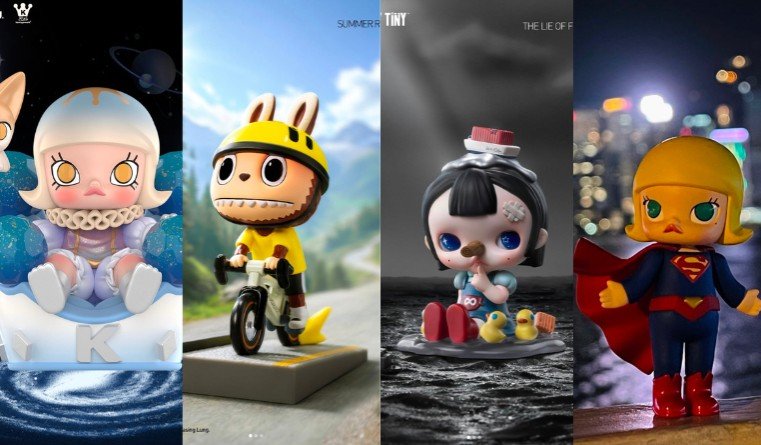
Fan drew a parallel between Sonny Angel and Labubu. Recognizing the business potential demonstrated by Sonny Angel, Pop Mart began developing its own trendy toy IP. According to the article, this strategy involved both signing global designer talent – such as Kenny Wong (creator of Molly), Seulgie Lee (Satyr Rory) and Lang (Hirono and Snowy) – and building an in-house design team to launch original IPs like Crybaby, Minico and Zsiga. In Fan’s words, Pop Mart effectively became a “talent scout” for the designer toy world, laying the foundation for its current IP-driven empire. 

Fear of missing out drives consumer behaviour like never before. Pop Mart has mastered this psychological trigger through limited-edition Labubu drops. These toys aren’t available year-round; instead, they appear in carefully timed releases that spark urgency and anticipation. 

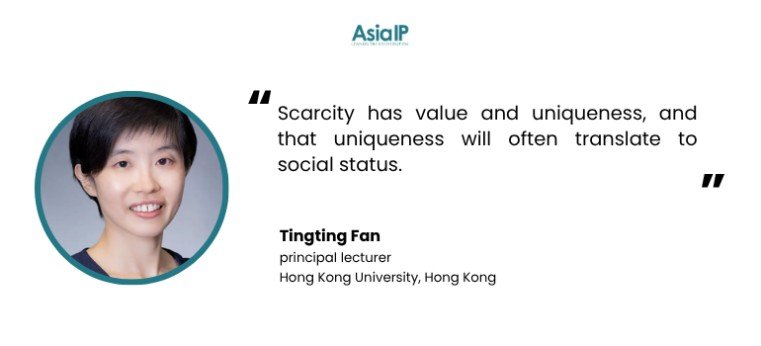
“Scarcity has value and uniqueness, and that uniqueness will often translate to social status,” Fan told Asia IP. 

This scarcity strategy transforms a simple purchase into an event. For Labubu fans, it means queues snaking outside stores worldwide, as collectors race to secure a figure before it disappears. Scarcity doesn’t just sell products; it creates status. Owning a Labubu signals membership in an exclusive community, a badge that says: “I didn’t miss out.” 

For brands, the lesson is scarcity fuels desire. Limited-time offers, exclusive product drops and curated communities can turn ordinary products into cultural phenomena. But with every surge in popularity comes an inevitable shadow, counterfeits. As Labubu fever swept the globe, a parallel market of knockoffs quickly followed, creating new challenges for Pop Mart. 

Knowingly buying the fake 

As the popularity of Labubus continues to rise, so too has the market for counterfeit versions, commonly known as “Lafufus.” In response, authorities in Shenzhen’s Huaqiangbei district have launched inspections aimed at cracking down on vendors selling fake or low-quality Labubu merchandise.  

Nevertheless, these knockoffs remain easy to find. Most Lafufus are produced by small factories in China’s Guangdong and Hebei provinces and are distributed widely both within the country and internationally. 

“It is quite an interesting phenomenon; people are hunting after Lafufus because it’s becoming a trend of its own,” said Anthony Leung, a partner at Haldanes law firm in Hong Kong. Leung described counterfeiting today as no longer just about offering a direct substitute for the original. In the case of Lafufus, consumers know they’re buying a dupe of Labubu, and they’re doing it intentionally. 

While counterfeit Labubu merchandise could potentially undermine Pop Mart’s brand and revenue, it also reflects the character’s immense popularity. Some buyers knowingly seek out knockoffs because Lafufus are more affordable or offer designs that are hard to find through official channels. However, these fakes harm the brand by diverting sales and introducing lower-quality products into the market.  

Counterfeits signal a thirst for the aesthetic and price accessibility. For a character brand whose equity is “feel‑good” and fashion‑adjacent, this reputational drag is non‑trivial. 

Authorities in the United States and the United Kingdom have warnedconsumers that counterfeit Labubus are poorly made and may contain small, detachable parts such as eyes, hands and feet, which present a serious choking hazard to young children. 

Chinese authorities are also trying to take them off the market, seizing more than 1.8 million dolls that were intended for export since the beginning of this year. 

Between late June and early July, Chinese customs authorities seized nearly US$49,000 worth of counterfeit Labubu-related items, including blind-box toys, plush dolls, accessories and stationery. Major busts occurred at checkpoints such as the Hong Kong-Zhuhai-Macau Bridge, and police in Shanghai arrested eight individuals in connection with the counterfeit trade. 

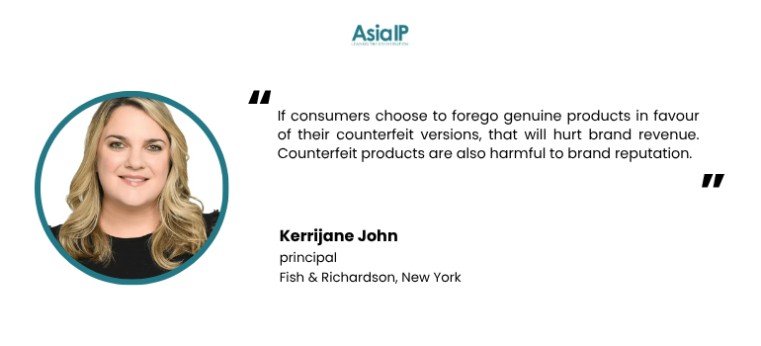
“If consumers choose to forego genuine products in favour of their counterfeit versions, that will hurt brand revenue. Counterfeit products are also harmful to brand reputation,” said Kerrijane John, a principal at Fish & Richardson in New York. She explained that consumers who come across counterfeit products may mistakenly associate the lesser quality of the counterfeit products with the genuine brand, thus tarnishing the brand’s image. That may render those consumers less likely to purchase from the genuine brand in the future, resulting in lost revenue. 

What happens after the peak? 

“Last year was Stanley cup; this year was Labubu and Dubai chocolate. These are all viral trends that arise naturally,” Leung said. He believes that Pop Mart was not prepared or expected Labubu to go viral, and brands should take this into consideration when moving forward or approaching marketing strategies.  

Leung warned that many companies make the opposite mistake, over-preparing in the wrong way.  

“One of the biggest problems is planning ahead. Some brands have been way too aggressive in their expansion, registering a lot of trademarks and pushing for many products,” he said, which often leads to very substantial legal fees. Instead, Leung advocates for a more disciplined playbook: start with a core market, build a strong IP foundation and scale deliberately once traction is proven. 

“Labubu is a trend, and anything that is a trend might end someday,” Fan said, noting that the ecosystem hasn’t finished yet. Her point is that virality is inherently volatile. While Labubu currently dominates the cultural zeitgeist, the ecosystem around it is still evolving. Pop Mart understands this and is actively investing in multiple IPs to avoid over-reliance on a single character. This diversification strategy is critical for long-term resilience in an industry where consumer attention can shift overnight. Pop Mart’s investment in in-house design and partnerships with independent artists gave it a portfolio that could weather trends and spawn new ones. 

Still, Labubu remains at the centre of Pop Mart’s growth. The company recently announced that its mini-sized Labubu vinyl plush pendant, part of The Monsters Pin For Love series, will debut in a range of colours inspired by the letters of the alphabet, each retailing for US$22.99. 

The collection also features 30 blind-box letter pendants, each showcasing a unique pattern paired with a Monsters charm, priced at US$18.99 per box. 

Adding to the excitement, Pop Mart is introducing the Rock the Universe vinyl plush doll from The Monsters Big Into Energy series. This edition stands out as the first in the Monsters lineup to feature long fur and a specialized dyeing technique, ensuring that no two figures are exactly alike. Each plush will also come adorned with a pearl-and-alloy heart necklace and will be priced at US$114.99. 


Law firms