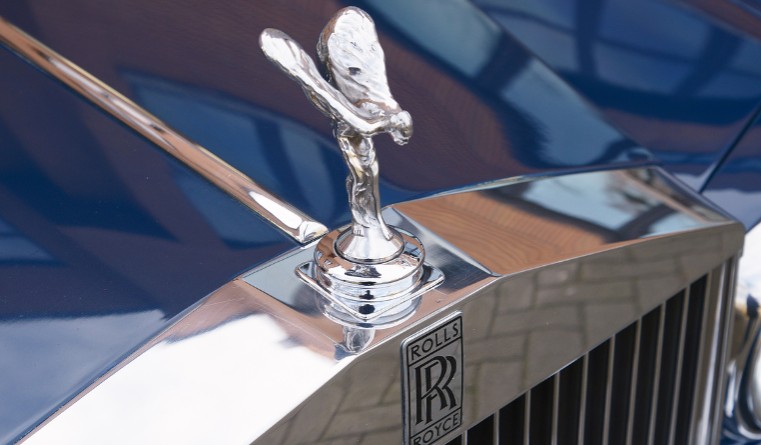
In China, cross-class protection under Article 13(3) of the Trademark Law includes two independent paths: cross-class confusion and anti-dilution protection, which can be applied simultaneously. Xiaoping Wei explains.
Well-known trademark protection is a core system of trademark law, which provides expanded protection for brands with high reputation and influence. In recent years, malicious trademark squatting and cross-class imitation have become increasingly common, making cross-class protection of well-known trademarks a key issue in trademark practice. To intuitively and concretely interpret the applicable rules of relevant laws and judicial interpretations, this article takes a typical administrative judgment of the Beijing Intellectual Property Court as a practical example, and discusses the recognition criteria of well-known trademarks and the application rules of cross-class protection under Article 13(3) of the 2019 Trademark Law of the People’s Republic of China. This case is typical and representative, as it involves a world-renowned luxury automobile brand, covers cross-class protection from Class 12 automobiles to Class 18 luggage and other goods, and fully reflects the core considerations of judicial practice in identifying well-known trademarks and judging cross-class protection, which can provide clear guidance for the understanding and application of the system.
Overview of the invalidation case
Rolls-Royce Motor Cars Limited, as the exclusive licensee of Rolls-Royce Plc. for the cited trademark  on “automobiles”, filed an invalidation request against disputed trademark
  registered on Class 18 goods including golf umbrellas, suitcases, wallets, briefcases, backpacks, leather bags and climbing sticks. The plaintiff claimed that the registration and use of the disputed trademark violated Article 13(3) of the Trademark Law.
The China National Intellectual Property Administration (CNIPA) issued a decision maintaining the registration of the disputed trademark. It held that the disputed trademark did not constitute copy or imitation of the cited trademarks, and thus it was difficult to conclude that its registration would mislead consumers or damage the interests of the plaintiff. The plaintiff refused to accept the decision and instituted administrative litigation before the Beijing Intellectual Property Court.
After trial, the court revoked the decision made by CNIPA. The court held that the disputed trademark constituted copying and imitation of the plaintiff’s well-known trademark, which was likely to mislead the public and damage the plaintiff’s legitimate interests. Therefore, the registration of the disputed trademark violated Article 13(3) of the Trademark Law. The court ordered the CNIPA to make a new reexamination decision.
Recognition criteria of well-known trademarks
Legal basis and statutory factors
According to Article 14 of the 2019 Trademark Law, the recognition of well-known trademarks shall consider the following five factors: (1) awareness of the trademark among relevant public; (2) duration of use; (3) duration, extent and geographical scope of publicity; (4) records of protection as a well-known trademark; (5) other factors contributing to the fame of the trademark.
Relevant public refer to consumers, distributors and other stakeholders related to the goods, rather than the general public. The recognition of well-known trademarks follows the principles of case-specificity, necessity and passive protection, meaning that recognition is only conducted when necessary for the case and shall not be treated as an honorary title.
Not all five factors need to be satisfied. Article 4 of the Judicial Interpretation of the Supreme People’s Court on Well-Known Trademarks clarifies that a court may find a trademark well-known without considering all statutory factors if the facts are sufficient.
Application of recognition criteria in this case
In this case, the plaintiff submitted sufficient evidence to prove the well-known status of Cited Trademark No. 29275  . First, media reports, national library retrieval materials, sales data and annual reports from 2019 to 2023 showed that the marks
  , “ROLLS-ROYCE” and “劳斯莱斯”(Rolls-Royce in Chinese) had extremely high awareness in the automotive field before the application date of the disputed trademark. Second, the cited trademark was applied for in 1958 and has been used continuously for more than 60 years, forming a stable connection with the brand. Third, the plaintiff submitted a large number of publicity materials covering exhibitions, official website information and authoritative media reports, which reflected wide geographical influence. Fourth, the plaintiff submitted previous judicial judgments that had recognized the “RR” trademark as well-known on automobiles.
In addition, many prior judgments confirmed that the ,  device, the Chinese mark “劳斯莱斯” and the English mark “ROLLS-ROYCE” have formed a close and stable corresponding relationship. Therefore, the well-known status of related marks can also indirectly prove the well-known status of Cited Trademark No. 29275. Based on the above evidence, the court reaffirmed that the cited trademark had become well-known on automobiles before the application date of the disputed trademark.
Theoretical basis of cross-class protection
Provision of Article 13(3)
Article 13(3) of the 2019 Trademark Law provides that where a trademark applied for registration on non-identical or dissimilar goods is a reproduction, imitation or translation of another’s registered well-known trademark, misleading the public and thereby damaging the interests of the registrant, it shall not be registered and prohibited from use. This provision breaks through the limitation of “similar goods” and establishes the cross-class protection system for registered well-known trademarks.
Two paths: Confusion and dilution
According to the 2021 Judicial Interpretation on Well-Known Trademarks and the 2019 Guidelines for the Trial of Trademark Administrative Cases of Beijing High People’s Court, “misleading the public and causing damage” includes two types: confusion-based association and anti-dilution protection. In the Rolls-Royce case, after confirming the copy and imitation to the cited mark and the correlation between the goods covered, it was concluded that the registration and use of the disputed trademark are likely to cause the relevant public to believe that there is a specific connection between it and the cited trademark, thereby misleading the public; or sever the inherent association between the cited trademark and the plaintiff, weaken or dilute the distinctiveness of the cited trademark, or improperly take advantage of its market reputation, which may cause damage to the interests of the plaintiff. It perfectly demonstrates the parallel application of these two paths, which is of great reference value for understanding the theoretical connotation of cross-class protection.
Cross-class confusion means that relevant consumers may mistakenly believe that the goods come from the same source or that the operators have licensing, affiliation or other specific connections. In this case, the disputed trademark is used on Class 18 luggage, umbrellas and other goods, which share high-end consumer groups and sales channels with automobiles. Rolls-Royce also sells such peripheral products, so the relevant public is likely to mistakenly believe that the disputed trademark goods are authorized by the plaintiff, or have certain connection.
Anti-dilution protection applies even without source confusion. In this case, imitation of the “RR” mark will also likely to weaken the unique connection between the cited trademark and the plaintiff, and improperly take advantage of its high-end brand reputation, thus constituting dilution.
Confusion and dilution are two independent paths. Dilution does not take confusion as a prerequisite. As long as the public can associate the disputed trademark with the well-known trademark, dilution may be established. The two paths can be applied at the same time. For example, in Rolls-Royce’s other case involving well-known recognition and cross-class protection, the court held that “even if some consumers would not confuse the source, the association would still weaken the distinctiveness of the well-known trademark and damage the rights holder’s interests”.
Key factors determining the scope of cross-class protection
To further clarify the judgment logic of cross-class protection, we still take the Rolls-Royce case as an example to analyze the key factors considered by the court, which can make the abstract legal factors more concrete and operable.
Trademark distinctiveness
Trademarks with strong inherent distinctiveness are more closely linked to their owners and more vulnerable to dilution, so they deserve wider protection. The  logo is a highly distinctive letter combination mark with strong uniqueness and recognizability, so it can obtain strong cross-class protection.
Trademark fame
The higher the fame, the wider the protection scope. Article 11 of the Opinions of the Supreme People’s Court on the Trial of Trademark Grant and Confirmation Cases provides that the scope of protection for well-known trademarks on dissimilar goods shall be commensurate with their fame. Rolls-Royce’s trademarks have world-renowned high reputation, so their cross-class protection scope is relatively wide.
Relevance of goods
Proving the relevance of goods is often critical to obtaining cross-class protection. The scope of protection can be dynamic, depending on the relevance of goods in individual cases. Cross-class protection from Class 12 to Class 18 is not a universal standard, but a judgment based on specific facts. However, in practice, previous cross-class protection of the same mark to a specific class can be used as a reference.
Trademark similarity
Higher similarity leads to a higher possibility of confusion and dilution. In this case, the prominent part  of the disputed trademark is highly similar to
  in letter composition, arrangement and visual effect. The letters “ROYAL ARES” of the disputed mark is similar to “ROLLS-ROYCE” in pronunciation and letter composition. The overall layout and design style of the disputed trademark
  are also close to the
  device. Taking the above into consideration, the court finds copying and imitation.
Subjective bad faith
Subjective bad faith is also an important factor in applying Article 13(3). According to the guidelines of Beijing High People’s Court, the court shall comprehensively consider the applicant’s subjective state when determining the protection scope.
In this case, the third party had obvious bad faith: first, he applied for more than 70 trademarks covering multiple classes, far exceeding normal business needs; second, many of his trademarks were copies of other famous brands such as MALBON GOLF and SWAG GOLF; third, he had been found to obtain registration through fraudulent means in the “SWAGGOLF” case; fourth, he could not give a reasonable explanation for applying for a mark similar to the plaintiff’s well-known trademark. The court took the third party’s bad faith as an important basis to support the finding of imitation.
It should be noted that if the disputed trademark has been registered for more than five years, according to Article 45(1) of the Trademark Law, the petitioner must prove bad faith registration in addition to proving the well-known status of the cited trademark. Mere copying is usually not enough; courts will consider repeated squatting, operating in the same industry and other circumstances that reflect the intent to free-ride.
Significance of the case
This case was selected by the Beijing Intellectual Property Court for a public hearing in the Sino-German Industrial Park, with representatives from more than a dozen enterprises observing the trial. The case typically reflects the factors considered by the court in recognizing well-known trademarks and the application rules of cross-class protection. It also marks another successful case in which the  logo was recognized as well-known on automobiles in China.
The case clarifies the following important rules: first, the recognition of well-known trademarks must be based on sufficient evidence and comply with statutory factors; second, cross-class protection includes confusion and dilution, which are independent and can be applied together; third, the scope of cross-class protection should comprehensively consider distinctiveness, fame, relevance of goods, similarity of trademarks and subjective bad faith; fourth, the record of prior recognition as well-known, record of protection against similar other marks, record of cross-class protection to a specific class could serve as reference in supporting the present case.
Conclusion
In China, the recognition of well-known trademarks follows statutory factors and adheres to the principles of case-specificity, necessity and passive protection. Cross-class protection under Article 13(3) of the Trademark Law includes two independent paths: cross-class confusion and anti-dilution protection, which can be applied simultaneously. The scope of protection is not unlimited; it should be determined by comprehensively evaluating trademark distinctiveness, fame, relevance of goods, similarity of signs and the applicant’s subjective bad faith, so as to achieve a balance between private rights and public interests.
The Rolls-Royce case, as a typical case selected for this article, fully demonstrates the practical application of the above rules and reflects the judiciary’s strict attitude toward malicious squatting and deliberate imitation, strengthens the cross-class protection of highly renowned trademarks, and helps maintain a fair and orderly trademark registration management order. With the continuous improvement of judicial interpretations and trial guidelines, the cross-class protection system of well-known trademarks will become more unified and predictable, which will not only effectively protect the legitimate rights and interests of brand owners, but also promote the healthy development of market competition.