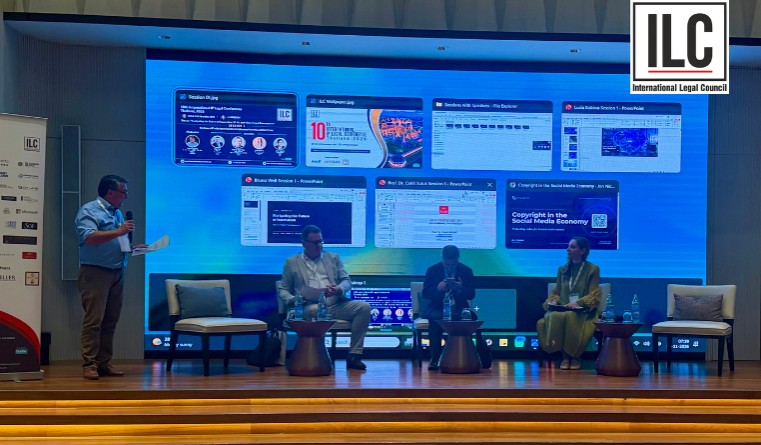
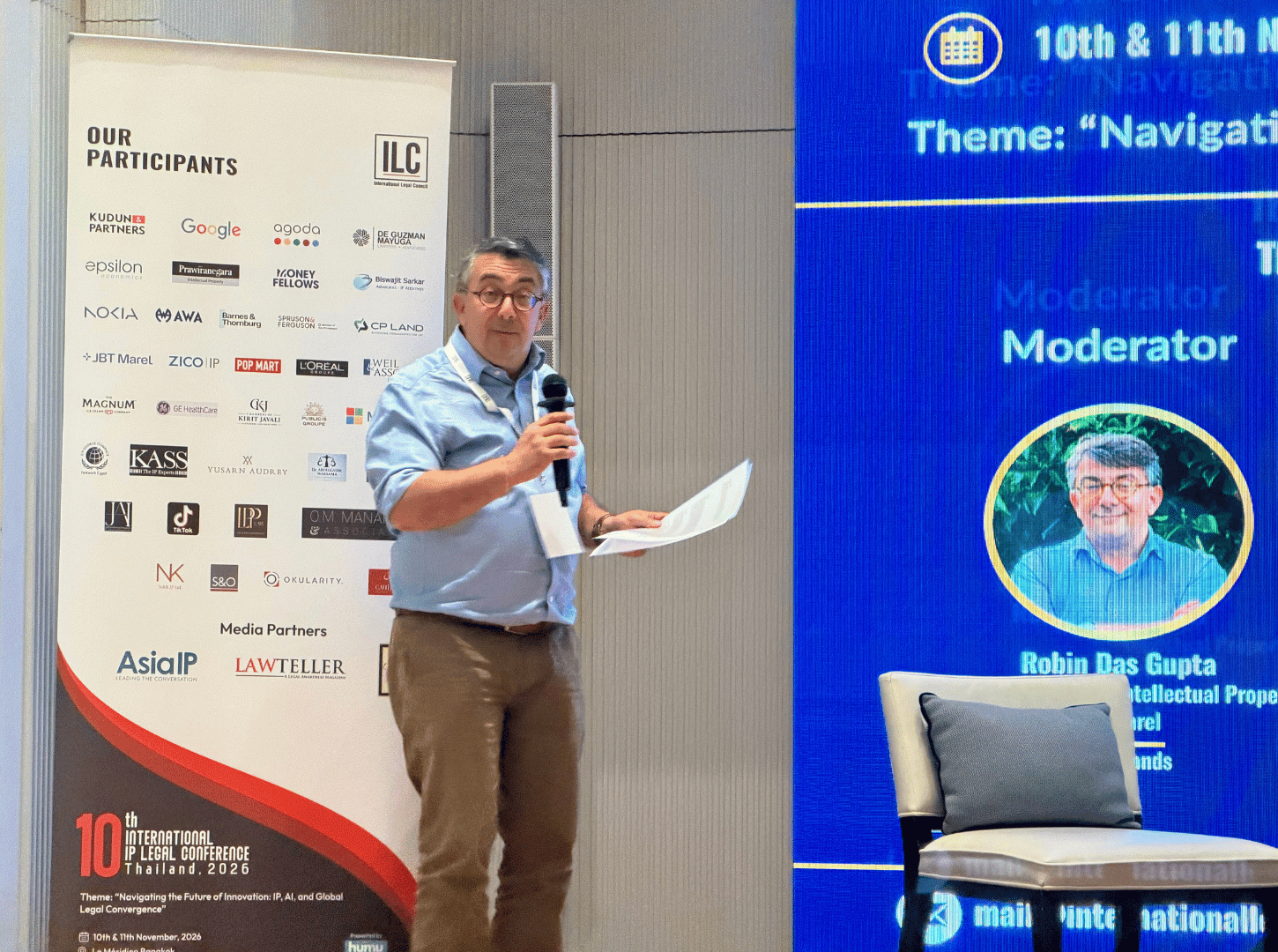
As generative artificial intelligence continues to disrupt traditional notions of creativity and innovation, intellectual property professionals face a challenge: balancing technological advancement with legal frameworks designed for human creators. That challenge took centre stage during the session, “The Future of IP in the Age of Generative AI, Autonomous Innovation and Data Privacy”, at the 10th International IP Legal Conference Thailand, 2026 in Bangkok on November 10-11.
The panel examined emerging questions around AI-generated works, inventorship, ownership, data governance and cross-border compliance and how existing IP frameworks are responding to these developments.
Growing divergence in global regulation
Opening the discussion, Bruno Weil, a partner at Weil & Associes, highlighted the fragmented international regulatory landscape.
“We are seeing a fragmented regulatory environment,” he said, noting that major jurisdictions are pursuing markedly different approaches to AI governance, copyright and privacy regulation.
According to Weil, the European Union has adopted one of the world’s most comprehensive regulatory models through the combination of the AI Act, the General Data Protection Regulation (GDPR) and copyright provisions governing training data, including text-and-data-mining opt-outs, alongside transparency requirements for general-purpose AI providers under the AI Act. The United States continues to rely heavily on litigation, judicial interpretation and agency guidance, while China has introduced AI-specific rules covering content labelling, security assessments and platform responsibilities. The UK, Japan, Singapore and India have meanwhile taken their own approaches to AI governance.
These differences have become more apparent over the past two years. The EU AI Act, which entered into force in 2024 and is being implemented in phases, introduced copyright-compliance and training-content summary obligations for general-purpose AI providers in August 2025. Meanwhile, U.S. courts are becoming the primary battleground for AI copyright disputes through lawsuits brought by authors, publishers, visual artists and media organisations against major AI developers.
Weil noted that despite differing legal approaches, he saw a common principle emerging globally. “Most jurisdictions continue to require meaningful human contribution for copyright and patent protection.”
That principle has been reinforced by decisions from the U.S. Copyright Office, which has determined that AI-generated material without sufficient human authorship is not eligible for copyright protection, and by patent authorities in several jurisdictions that have rejected AI systems as inventors, most notably in the widely watched DABUS cases.
Copyright, AI training and remuneration
One of the session’s debates centred on the use of copyrighted works to train AI models.
Cahit Suluk, founding partner of Suluk Intellectual Property Law Firm, framed the issue around three fundamental questions: whether training on protected works infringes copyright, whether AI outputs themselves infringe existing rights, and whether those outputs should qualify for legal protection.
“My position is that AI training should be permitted, but it should be accompanied by equitable remuneration and collective management mechanisms,” he said.
The proposal reflects international debate about licensing and compensation models for AI training. Some collective management organizations representing authors, musicians and publishers in Europe and elsewhere have increasingly advocated remuneration systems that would allow AI developers to continue training models while ensuring creators are compensated.
Suluk added that policymakers should consider remuneration mechanisms when AI-generated content substitutes for human-created works in commercial markets.
“These are policy choices, but protecting human creativity must remain central,” he said.
His comments come at a time when publishers, record labels and collecting societies worldwide are seeking new frameworks for AI licensing. Several major technology companies have already entered content-licensing agreements with news publishers and media organisations, suggesting that commercial solutions may emerge alongside regulatory reforms.