


Indonesia seeks to rewrite the rules on journalism and copyright
15 October 2026
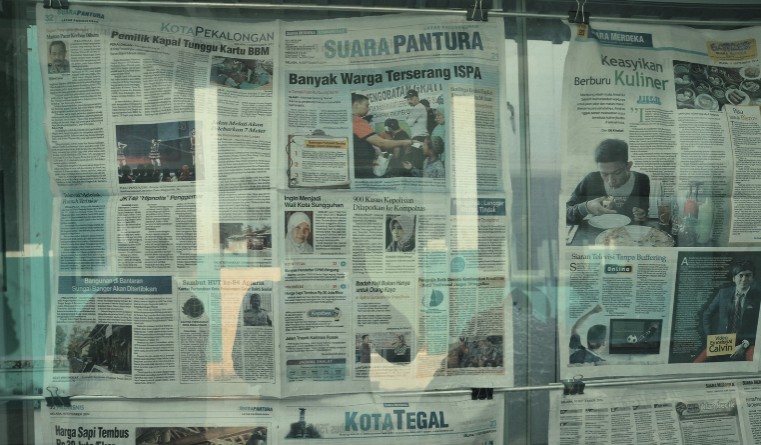
Indonesia is seeking stronger copyright protection and clearer rules on remuneration for journalistic works through domestic legislative discussions, regional cooperation with its ASEAN neighbours and engagement with the World Intellectual Property Organization (WIPO). “In general, our legal policy recognizes journalistic works as copyrightable material,” law minister Supratman Andi Agtas said in Bali on October 10, 2026. “That is the crucial first step; as for implementation, much of that will be determined in the implementing regulations.”
He was speaking at the ASEAN Forum on the Protection of Journalistic Works in the Copyright Regime in the Digital Era, which was held at The Patra Bali Resort and Villas in Badung from October 9 to 11. The forum was co-organized by the Law Ministry’s Directorate General of Intellectual Property (DJKI) and the Press Council and brought together Press Council members, media leaders and legal experts from across ASEAN and from Scotland.
A copyright overhaul takes shape
On October 6, the House of Representatives’ Legislation Committee formed a working committee to consider amendments to Law No. 28 of 2014 on Copyright. The working committee is chaired by Martin Manurung, deputy chair of the Legislation Committee and a member of NasDem. Deliberations were scheduled to resume when Parliament’s next sitting opens in November, with the Legislation Committee and the government aiming to complete them by December 2026. Suara reported a target date of December 17, 2026. The bill became a House initiative on March 12, 2026 and proceeded to deliberations with the government under Presidential Letter R-21/Pres/05/2026.
“Overall, the Copyright Bill aims to align regulations with the era of digitalization and technological transformation and provide enhanced protection for creators, copyright holders and rights holders, including in journalistic works,” Manurung said. He added that the bill “fundamentally governs economic rights, moral rights, licensing management, royalties and dispute resolution mechanisms.” It also covers platform obligations, traditional cultural expressions and AI-based creations.
A draft reviewed by Reuters in July would require tech platforms to pay for aggregating, republishing or link-previewing news, and for using it to train AI. Payments would go through state-supervised collective management organizations (CMOs). The draft would also ban AI imitation of a creator’s “distinctive style”, require disclosure of AI use and protect AI-assisted works only where there is enough human involvement. Platforms that do not comply could lose their local business permits.
“The development of generative AI has disrupted the copyright framework,” said Hermansyah Siregar, the director general of intellectual property. “If unregulated, it could kill human creation.” Google replied: “Rigid, overbroad mandates, however, would harm local creators, slow innovation, and leave Indonesia as an international outlier, ultimately discouraging the investment needed to drive its digital future.” Ari Juliano Gema, an IP and entertainment lawyer, warned that the bill appeared to treat commercial AI use and research use as the same thing.
The debate over the bill reflects a broader concern among regional media representatives about how the economic value of journalism is shared. Press Council chair Komaruddin Hidayat highlighted the imbalance, arguing that journalists who investigate and produce reporting do not necessarily receive fair compensation, while platforms that distribute and monetize their work can capture a disproportionate share of its economic value.
At the close of the forum, Hidayat read out the Bali Joint Statement. It recognizes journalistic works as intellectual creations with economic value. It supports national copyright frameworks that protect those works without reducing public access to information, and it calls for fair, transparent and accountable rules on how digital platforms use them. Delegates also committed to regional cooperation and collective negotiation. The Press Council also wants limits on text and data mining for AI training.
Supratman proposed a consultation forum for ASEAN press councils. “We do not need identical rules to achieve our shared goals,” he said. He said media representatives, the Press Council and the Ministry of Communication and Digital Affairs would decide whether to set up a dedicated CMO for news.
The WIPO track
Indonesia has also asked WIPO to develop global royalty standards. “We hope WIPO will adopt a standard, because currently, negotiations are purely contractual – business-to-business (B2B) – and that is how it operates,” Supratman said. Jakarta will advance the proposal at the Standing Committee on Copyright and Related Rights (SCCR) at its 49th session, scheduled for November 30 to December 4, 2026, after outreach to the Asia-Pacific group and GRULAC. The president’s special envoy for the creative economy, Yovie Widianto, is part of the effort.
The proposed law could also have implications beyond Indonesia. According to The Jakarta Post, Indonesia could become the first in Southeast Asia to incorporate AI provisions into its copyright law. The bill would also establish a framework for remuneration for the use of news content through copyright legislation. Indonesia already has Presidential Regulation 32/2024, which addresses platform responsibility for quality journalism. If enacted, the proposed law could require platforms and AI developers operating in ASEAN’s largest market to consider licensing agreements covering news content, link previews and training data. Other ASEAN regulators could follow Indonesia’s lead.
- Asia IP