

WIPO leader who demystified IP for laypersons – SG Minister for Law on re-electionist Daren Tang
09 October 2025

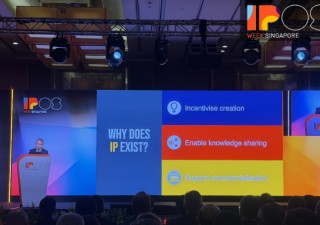
According to Singapore’s Minister for Law and Second Minister for Home Affairs, Edwin Tong, World Intellectual Property Organization (WIPO) Director General Daren Tang has been leading the organization to demystify IP for laypersons to ensure that IP is for everyone across the spectrum, and not just for some.
The Singapore Government nominated Tang for a second term as director general of WIPO from October 1, 2026, to September 30, 2032. The first Singaporean to lead a major United Nations specialized agency, Tang assumed the position in October 2020. Prior to this appointment, Tang was chief executive of the Intellectual Property Office of Singapore.
Tong made the statement as part of his speech as the guest of honour during a diplomatic reception in Geneva, Switzerland, held on September 29, 2025. The reception was organized in support of Tang’s re-election campaign.
“He has expanded WIPO’s efforts to support innovators and creators around the world,” said Tong in his speech. “For example, WIPO Academy, as the world’s largest IP training institute, has equipped over 600,000 persons in the past five years with IP knowledge and skills, of whom 400,000 were youths, 300,000 were women and 80 percent were from developing countries. [WIPO Academy has used] IP as a tool, as a lever to level up, to ensure that we lift as much of the bottom of the base as possible, to ensure that there is inclusive growth for all.” He added that WIPO’s beneficiaries also included micro, small and medium enterprises.
Tong also cited two treaties which WIPO successfully concluded in 2024. These are the WIPO Treaty on IP, Genetic Resources and Associated Traditional Knowledge (GRATK), adopted in May 2024 and the Riyadh Design Law Treaty (RDLT), adopted in November 2024.
GRATK is the “first WIPO treaty to address the interface between intellectual property, genetic resources and traditional knowledge and the first WIPO treaty to include provisions specifically for Indigenous Peoples as well as local communities,” according to WIPO’s website. Under the treaty, each contracting party must require applicants for patents involving a claimed invention developed using genetic resources to reveal the genetic resource’s country of origin or source. Medicinal plants and animal breeds are some examples of genetic resources. If the claimed invention in the application is based on traditional knowledge associated with genetic resources, each contracting party must also require patent applicants to reveal the local community or the Indigenous Peoples from whom the traditional knowledge was sourced.
RDLT generally aims to standardize, simplify and speed up the system for acquiring industrial design protection, among others.
According to Tong, the last WIPO treaty before GRATK and RDLT was concluded more than 10 years ago. “To be able to conclude both of these treaties was no mean feat. I think that reflects the ability to bring people together, to convene, as well as to move forward collectively,” he said.
“At the same time, Daren has continued to emphasize good governance and maintain the strong financial health of WIPO, and that’s important. However much change you want to make around the world,” Tong stated, “you’ve got to ensure that the core is strong, governance is transparent and WIPO is run efficiently and capably.”
Several WIPO member states, including those in ASEAN and Africa, as well as Belgium, France, Japan, Qatar and the UAE, have expressed support for Tang’s re-election.
- Espie Angelica A. de Leon