


Judicial Leader Call for Stronger IP Literacy and Faster Innovation Governance
04 February 2026
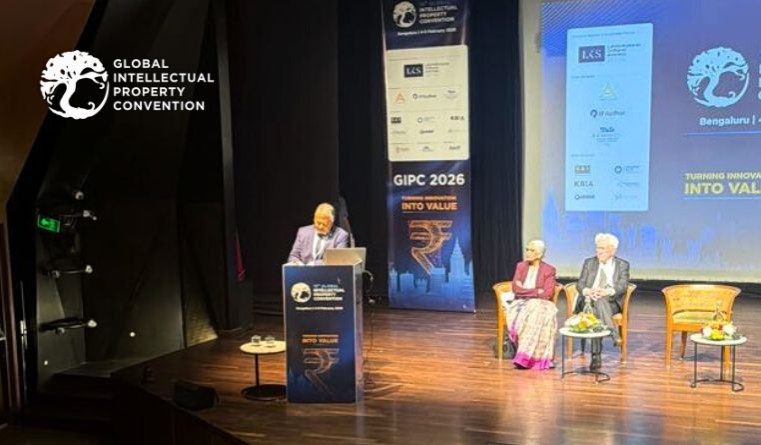
In a session during the opening day of the GIPC, Justice N. Sethil Kumar of the Madras High Court, highlighted the urgent need for judges to deepen their understanding of IPR to dispense timely and informed justice in an era of rapid technological advancement.
Judicial Burden and the Need for Deeper Research
Sethil Kumar opened the session by addressing a persistent challenge in India’s legal system: judicial pendency. He cautioned against curtailing arguments for the sake of speed, arguing instead for more efficient case management supported by rigorous research. Judges today, he noted, must interpret disputes involving patents, trademarks, copyrights, and trade secrets—areas that often involve highly technical details. To do this effectively, he stressed, judges must commit to constant learning, detailed study of current innovations, and participation in specialized conferences such as the one underway.
He emphasized that modern IPR cases hinge on “minute facts,” making it imperative for judges to stay informed about evolving technologies, emerging business models, and international precedents.
Turning Innovation Into Economic Value
A significant portion of Justice Senthil Kumar’s address focused on the central theme of the conference: translating innovation into tangible economic value through strategic protection and commercialization of IP. He outlined the foundational types of intellectual property—patents, trademarks, copyrights, and trade secrets—and explained how each plays a distinct role in safeguarding creative and technological achievements.
Patents, he noted, protect the functional aspects of new inventions; trademarks safeguard brand identity; copyrights protect creative expressions such as code, software, and user interfaces; while trade secrets preserve confidential know‑how.
To unlock economic potential, he stressed the importance of licensing, usage rights, and royalty structures, which enable creators and businesses to monetize their IP without necessarily manufacturing products themselves. He also emphasized the need to clearly define IP ownership in collaborations, warning that disputes often arise when pre‑existing and newly created IP are not properly documented.
IPR as a Catalyst for Innovation and National Growth
Senthil Kumar highlighted the broader societal impact of robust IP frameworks. Effective IPR enforcement, he argued, is essential for fostering technological breakthroughs, driving foreign investment, and supporting job creation. IP‑intensive industries contribute significantly to national GDP and help countries stay competitive in the global innovation economy.
He also spoke about the cultural role of IP, noting that copyright protection helps preserve and promote creative works, from literature and cinema to software and digital content. This protection, he said, incentivizes creators to continue producing works that enrich society.
Compulsory Licensing and Public Health Priorities
One of the strongest themes of the session was the intersection of IPR and public health. Senthil Kumar explained the legal mechanism of compulsory licensing, which allows governments—particularly in developing countries—to authorize the production of generic versions of patented medicines when public health demands it.
Citing the Doha Declaration of 2001, he reaffirmed that international TRIPS agreements do not prevent member nations from taking measures necessary to protect public health. Several countries, including Thailand, Brazil, and India, have relied on compulsory licensing to reduce the price of essential drugs.
India’s first major compulsory license, granted in 2012 to Natco Pharma for the anti‑cancer drug Nexavar, was discussed as a landmark example. Justice Senthil Kumar noted that such licenses require demonstrating the ability to “work the invention” locally and paying a fair royalty to the patent holder, ensuring a balance between public interest and innovation incentives.
Evolving Challenges in Trademarks and Copyright
The session also addressed the growing complexity of trademark and copyright cases, especially in a digital era where brands scale rapidly and AI‑generated content blurs the boundaries of authorship. Senthil Kumar emphasized the need for updated legal frameworks to handle emerging issues such as algorithm‑generated art, machine‑written code, and automated content creation tools.
Closing Remarks
In his concluding comments, Senthil Kumar reiterated that intellectual property must be viewed strategically—as a tool that can protect market share, attract investment, and elevate company valuations. Effective IP licensing and enforcement, he said, turn creativity and innovation into long‑term economic assets.
Senthil Kumar was speaking on day one of the Global IP Convention, being held in Bengaluru (Bangalore), India on February 4 & 5, 2026.
- Darren Barton, at the GIPC