

INTA 2026: Trademark stakeholders share challenges of non-traditional marks
05 May 2026
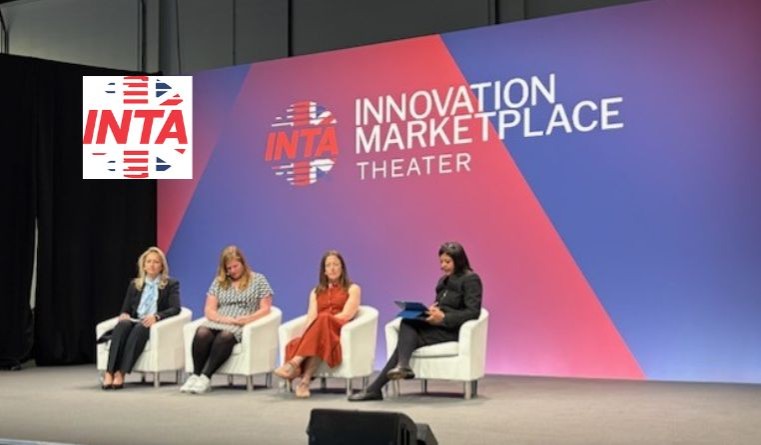
While traditional trademarks like logos, names, slogans are as important as ever, increasing innovation is pushing companies to find unique ways to carve out a distinct brand identity, ways by which consumers have immersive and sensory experiences, says Samta Mehra, partner and trademark chair at Remfry & Sagar in Gurugram.
“This leads to the rise of non-traditional trademarks, an exciting new tool that’s helping brands stand out in a crowded, ever-changing market, said Mehra, while moderating a panel discussion on non-traditional marks at the International Trademark Association’s 148th Annual Meeting at Excel London. “Fortnite is a great example of how gestures and movements can acquire commercial values. Dance moves, emotes, they are no longer just gameplay, they are now recognizable and monetizable assets. When we talk of haptics and gestures, you know, the vibrations or pulses you feel in your controllers while gaming over time, some of these could actually come to be associated with specific brands. Can they become trademarks?”
Maria-Gemma Huijnen, a partner at Chiever in Amsterdam and panellist, spoke of the “Super Simon” case, a landmark EUIPO Board of Appeal decision from March 2023 that allowed the registration of a 22-second multimedia animation as a trademark. This ruling confirmed that complex, animated multimedia signs can be distinctive, overcoming an initial refusal.
“The director general of Benelux office was retiring, Mr. Simon, and we thought, as a firm, it would be nice to, you know, say a goodbye to him and honour him with something fun,” said Huijnen. “Multimedia trademarks were becoming more and more interesting at that time, and so we thought, well, you know what, we’re going to say goodbye. But also we wanted to know, you know, how would EU IPO look at this, and how would they approach this whole application.”
The firm filed the application, which received a provisional refusal, but not before first receiving permission from BOIP, the Benelux Office of Intellectual Property, that it could use the BOIP logo, which appears in the video as a tattoo on Simon’s chest.
“EUIPO thought this [video] is too complicated to be a trademark; it's too long,” she said. “So we filed the complaint, and the Board of Appeals agreed with us. They said a multimedia trademark can be complex, because it is complex by nature, so the complexity or the length of such a multimedia trademark is irrelevant, as long as the product can identify commercial origin. You do not need to show the product. You do not need to identify the producer or sender within the sign itself, so the criteria for distinctiveness are the same for all types of marks. You will need to look at all the criteria, and the storyline, that’s what it was all about. The storyline was distinctive, per se. It was about someone leaving somewhere, going to the next place, and enjoying a next phase in the life. That’s a storyline.”
Charlotte Champion, head of trademarks and designs at the UK Intellectual Property Office, noted that her office hasn’t seen large numbers of multimedia marks. But, she said, “the ones we do see are very interesting.”
The trend in the United Kingdom, she said, is for people to protect personality rights.
“If there are any football fans here and they recognize this motion” – she crossed her arms across her chest – “then you will know that’s Cole Palmer, who is an English football player. We have accepted that trademark for the goods and services that he applied for.”
Champion stressed that there are limits to what this gives Palmer protection for. “In our mind, this is for him, Cole Palmer, the individual doing that motion. It doesn't mean he can prevent anyone else doing that goal celebration. Like I say, we’re seeing more interesting things.”
The increase in non-traditional marks raises an issue for trademark administrators, Champion said: How do trademark offices search for them?
“How do we make sure that we’re picking up earlier rights that we should be notifying people about? So that is a bit of a question for us. But as AI evolves, maybe we need to start drawing on what we can learn from those tools to help us really make sure we’re protecting these parts that we haven’t registered.”
Monica Leenders, a corporate lawyer who handles IP for oral healthcare and mother and child care products at Philips International in Eindhoven, the Netherlands, acknowledged the challenges non-traditional marks bring for all stakeholders.
“Businesses start thinking about new ways to show products or to design packaging, and then they come to us before the product is launched or the packaging is renewed. That’s the moment when we start thinking about how can you protect certain signature elements of whatever we put on the market.”
Leenders said that not only multimedia marks are bring about such interest, but also marks including position trademarks and sound marks.
“Then, jointly with the business, the marketing teams, as well as design teams, we try to come up with a strategy. But it’s not that we start a discussion with, hey, we can protect this new type of trademark. What shall we do with that? It’s often the other way around.”
Leenders said that when her legal team was thinking about Philips practice, it looked into whether the company could prove use and distinctiveness of one of its position trademarks. “We did that because BOIP accepted our application, but other IP offices, including the UK, rejected our application. So we thought about how can we overcome this and how can we prove distinctiveness? But it’s actually pretty difficult, because often marketing is not designed just to prove distinctiveness or use, it’s designed to make the product appealing to the consumer, so the message can be slightly different than what you’re trying to achieve to obtain a trademark, and then how you can try with surveys to prove the distinctiveness.”
- Gregory Glass in London