


Dual pathways: Optimizing industrial design protection strategy in Russia and Eurasia
22 April 2026

Design protection aims to gain a competitive advantage in the market and provides an effective tool for preventing copying or imitation of the product by competitors. Moreover, it offers new possibilities for commercializing intellectual property rights.
From the Russian perspective, a product’s design can be protected by obtaining an industrial design patent. An exclusive right to an industrial design is recognized and protected in Russia only upon its registration, followed by the issuance of a respective design patent.
Industrial design protection in Russia can be obtained through different routes, namely national, regional (Eurasian) and international (Hague system) routes.
Russia is a party to the Eurasian Patent Convention (adopted in 1994) and the Protocol on the Protection of Industrial Designs to this Convention (adopted in 2019), which serves as the legal basis for the Eurasian industrial design protection system. The Protocol is in force for eight countries: Armenia, Azerbaijan, Belarus, Kazakhstan, Kyrgyzstan, Tajikistan, Turkmenistan and Russia.
The Eurasian design protection system started to function on June 1, 2021, and allows obtaining a Eurasian design patent providing unified protection in all the mentioned countries, including Russia. Once issued, the Eurasian design patent does not need to be additionally validated by the national patent offices.
Russia also joined the Hague system in 2018.
In this respect it is interesting to state that the examination of the claimed design as to its compliance with the patentability requirements when using the national and international (Hague system) routes is conducted in an identical way, namely, by conducting an ex officio examination by the Russian Patent Office based on the Russian design legislation, while the Eurasian route involves conducting an examination of the claimed design by the Eurasian Patent Office according to the provisions of Eurasian legal regulations.
Therefore, it is interesting to look into the specifics of the Russian and Eurasian legal approaches to the examination of patentability and the possibilities for granting protection to industrial designs.
Requirement of unity of design
The approach to the qualification of the unity of designs in Russia and Eurasia is different.
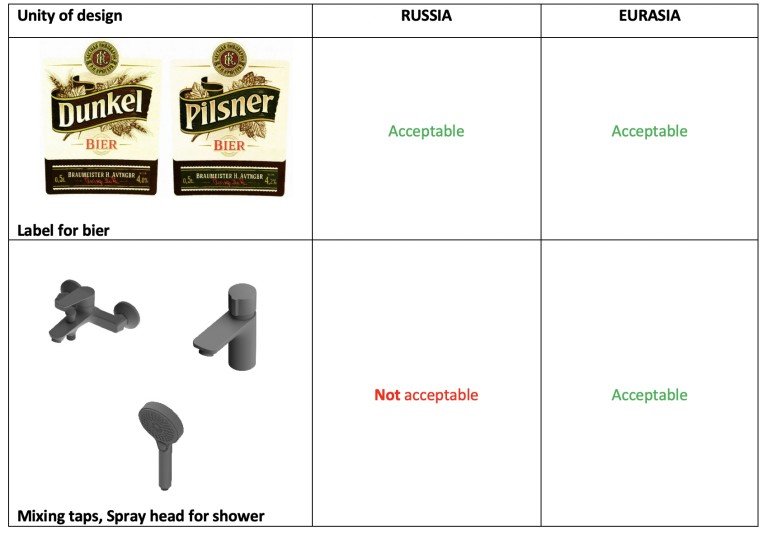
In Russia, a design application can cover a group of designs that form a single creative concept and constitute a set or variants of design that differ in non-essential features and/or features that determine the combination of colours, provided that the mentioned designs of the group belong to one and the same class of the Locarno International Classification of Industrial Designs (ICID).
The approach to the unity of design in Eurasia is quite similar to the one of the Hague system for international registration of industrial designs, namely, in Eurasia it is allowed to file a multiple design application that may include up to 100 designs provided they all belong to one and the same class of the Locarno International Classification (an exception here is made for designs representing a pattern).
The table below provides examples of which groups of designs may or may not be accepted for filing in a single design application in Russia and Eurasia.
Partial designs
In Russia and Eurasia partial designs can be claimed, however the difference lies in the admissible ways the disclaimed parts can be displayed on the representations of the design.
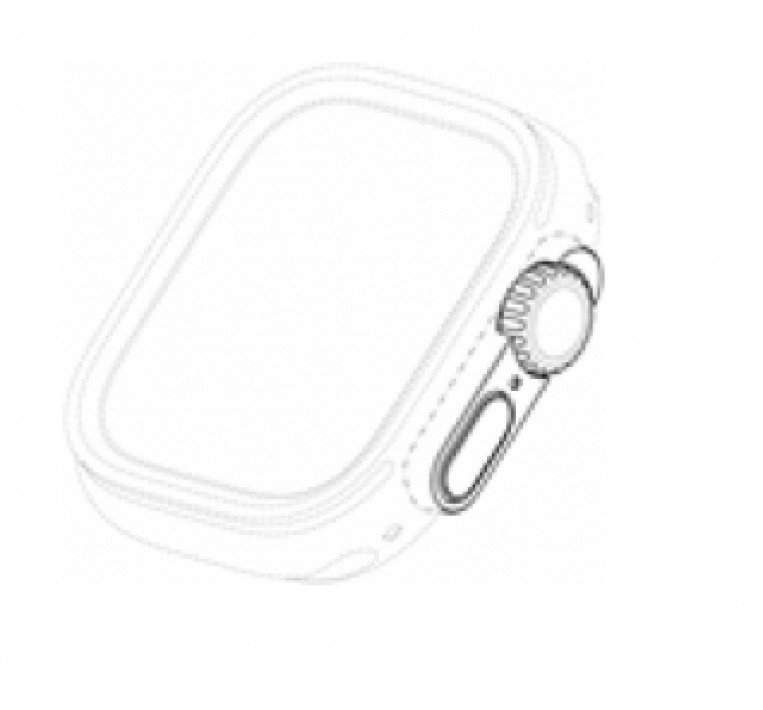
When filing a design application in Russia it is allowed to claim a partial design and submit representations with the unclaimed parts shown in dotted lines. Actually, this is the only possible way in Russia to show the disclaimed parts of the design on representations.
Example of acceptable representation with disclaimer in Russia:
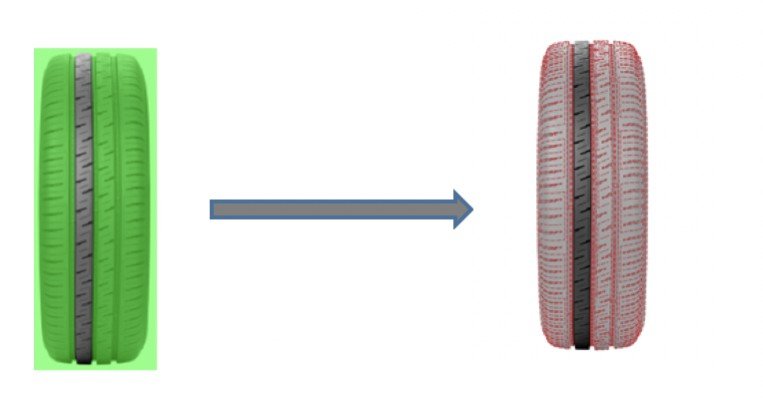
In case you wish to file an application in Russia for a partial design where the unclaimed part is shown by colour or by shading (for example, if you applied in this way in the first application in your country) it is still possible to file such an application in Russia, but it is necessary to amend the representations by adding the dotted lines.
Example showing how to amend such representation in order it is accepted in Russia:
The Eurasian design system provides for a larger set of tools to display those parts of the design for which protection is not claimed by the applicant. Namely, in Eurasia the unclaimed parts can be shown not only in dotted lines, but also by colour / shading / blurring. In case colour is applied to mark the disclaimed parts of the design, it is required that the parts for which protection is claimed are clearly distinguishable.
Examples of acceptable representations with disclaimer in Eurasia:

Priority documents
When claiming a Convention priority by filing a Russian design application and to validate the priority claim, the applicant must submit to the Russian Patent Office a certified copy of the first application in the original within the prescribed time limits. The Russian Patent Office is not actually a participating office of the WIPO Digital Access Service (DAS).
The Eurasian Patent Office (EAPTO) accepts priority documents submitted in the original or via the WIPO DAS.
Procedural and examination specifics
In both Russia and Eurasia an industrial design application undergoes formal (preliminary) and substantive examination. An important difference between the two routes lies in the stage following completion of the formal examination.
Namely, a Eurasian design application is published within one month after the EAPTO sends to the applicant a notification of a positive result of the formal examination, and there is no legal possibility to defer publication. Publication of a design application in Eurasia is a crucial stage of the registration procedure as it marks the start of a two-month term for filing oppositions against the design application by third parties.
In Russia a design application can be published by the Russian Patent Office after the completion of the formal examination only upon the applicant’s request, i.e. the application remains unpublished unless the applicant themselves asks for publication. By default, the publication of a design application in Russia happens only after it matures to grant and after payment of the respective grant fees. Accordingly, in Russia no opposition against a design application is available (while a granted design patent can be subject to an invalidation proceeding).
Furthermore, in Russia the deferment of publication of the design (although it is not provided for by the legislation) can be implicitly achieved through certain procedural possibilities.
The substantive examination in Russia involves conducting an in-depth information search by the examiner in order to check the compliance of the design with the criteria of patentability, including novelty, originality and the ability to mislead consumers.
In Eurasia, the claimed design is also checked as to its compliance with the patentability criteria and the list of checks made by the Eurasian examiner at the substantive examination stage has considerably expanded since 2024. However, in contrast to the procedure in Russia, the checks made by the Eurasian examiner do not involve an in-depth information search; moreover, there are some crucial differences in the approach applied in Russia and Eurasia to dealing with certain cited prior rights.
In particular, in Russia the examiner will check whether the claimed design itself or one or more of its elements conflict with prior trademarks valid in Russia. If such a trademark is cited against the design application, no letter of consent from the holder of the prior trademark can be accepted. This is also true for the case where the design applicant and the holder of the prior trademark are affiliated persons. A solution in this case can be the transfer of rights to the cited trademark to the design applicant or vice versa so that both the design and the cited trademark belong to one and the same holder.
The Eurasian approach to the cases where a prior conflicting trademark is cited against the claimed design is quite different, namely, a Eurasian design can still be registered if a letter of consent from the holder of the prior trademark is submitted.
Accordingly, in cases where the design includes certain elements (words or devices) that may potentially conflict with third parties’ prior trademarks, it is advisable to consider the Eurasian design registration procedure, especially if the applicant wishes to obtain protection in several jurisdictions.
Conclusion
Applicants have to take into account the specifics of both Russian and Eurasian procedures for registration of industrial designs; the choice of one of the procedures may depend on commercial interests and the strategy for expanding design protection.
When making the choice, applicants may bear in mind that the Eurasian procedure appears to be more flexible as far as the conduct of examination and the possibilities for obtaining legal protection are concerned, while the Russian procedure has some undeniable advantages, in particular if the applicant does not intend to disclose the design but still wishes to obtain a priority date by filing a design application.
About the author

Law firms