
The ASEAN Guide to IP Protection

03 November 2025

The ASEAN Guide to IP  Protection

Intellectual property regimes across Southeast Asia are becoming increasingly sophisticated, reflecting both trends and local priorities. While each jurisdiction has its own nuances, all maintain protections for trademarks, patents, industrial designs and copyrights, backed by layered enforcement systems. The ASEAN Guide to IP Protection 2025 offers expert perspectives and practical advice to help rights holders effectively manage, enforce and use their IP across the region.
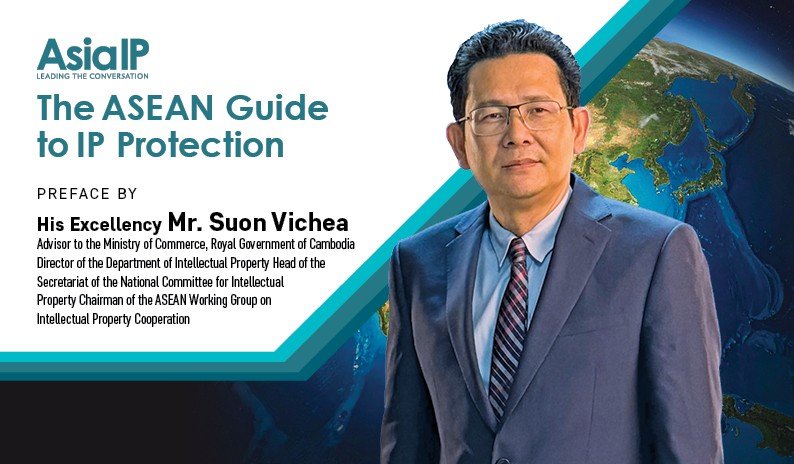

 

Preface

ASEAN has become a highly integrated and cohesive economic bloc connected with the global economy. – HE Vichea Suon, Royal Government of Cambodia

Read on


Introduction

With a combined population of over 700 million, growing purchasing power, and some of the world’s fastest-rising economies, the ASEAN region is rapidly emerging as a global powerhouse. – Karen Abraham, Shearn Delamore & Co.

Read on


Brunei

Hung Zheng On emphasizes that Brunei’s IP regime is evolving to accommodate non-traditional marks, automatic copyright protection without formal registration and a transitional scheme for re-registering foreign-filed patents.

Read on


Cambodia

Pheng Thea and David Haskel note that Cambodia’s IP protection remains procedural in nature.

Read on


East Timor

East Timor is still developing its IP framework and currently relies on cautionary notices as its main protection tool, but the government has shown commitment to establishing a formal IP regime.

Read on


Indonesia

Novita Sari Pulungan outlines major legislative updates, including expanded patentability for computer-implemented inventions and longer non-use grace periods for trademarks.

Read on


Laos

Recent reforms, including the 2025 trademark decision, European patent validation and strengthened enforcement, modernize Laos’ IP system and expand protection for innovators and investors.

Read on


Malaysia

Karen Abraham and Raghuram Supramanium outline Malaysia’s IP landscape, focusing on Trademarks Act 2019, Patents (Amendment) Act 2022 and recent copyright reforms.

Read on


Myanmar

Tin Ohnmar Tun outlines the 2020 Trademark Law, 2019 copyright and industrial design laws, and the ongoing development of enforcement and registration systems.

Read on


Philippines

Regina Reyes-Rara highlights the IP Code of the Philippines and recent implementing rules, emphasizing updated procedures for opposition, appeal and enforcement.


Read on


Singapore

Winnie Tham, Wei Ming Tan and Eugene Yang note Singapore’s IP system combines fast-track filing initiatives like SG Trade Marks Fast, robust patent acceleration frameworks under SIPS 2030 and progressive copyright reforms.

Read on


Thailand

Thailand’s IP system features fast-track and patent procedures, and strong civil and criminal enforcement through the specialized IP&IT Court. – Tilleke & Gibbins

Read on


Vietnam

S&O IP highlights Vietnam’s IP system with its newly established specialized IP courts, robust border recordal mechanisms and integrated administrative, civil and criminal enforcement.

Read on


Law firms

Please wait while the page is loading...

loader