


Suspected counterfeit Nike shoes seized from Ho Chi Minh City factory in one of Vietnam’s biggest raids
11 August 2026
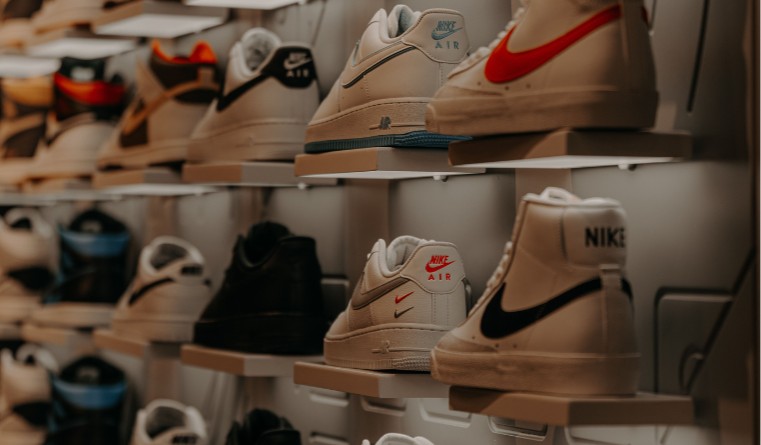
Almost 50,000 pairs of suspected counterfeit Nike, Nike Air and Air Jordan shoes were seized by Vietnamese authorities from a Ho Chi Minh City factory in July 2026 in what authorities consider as one of Vietnam’s biggest raids involving counterfeit products.
Each pair of shoes even bore an authentication code that appeared legitimate.
The seized items, which were manufactured for export to the U.S., were valued at more than D100 billion (US$3.8 million).
Authorities from Vietnam’s Agency for Domestic Market Surveillance and Development were tipped by the U.S. Homeland Security Investigations (HIS) regarding the facility in June 2026. According to the website of the U.S. Immigration and Customs Enforcement, HIS “has broad legal authority to conduct federal criminal investigations into the illegal cross-border movement of people, goods, money, technology and other contraband throughout the United States.”
Prior to the raid, 11 containers of suspected counterfeit Nike and Air Jordan shoes from the factory valued at over D25.46 billion (US$976,600) had already been exported to the U.S.

Hoa Tran | a partner and head of trademarks @ Baker McKenzie, Hanoi
Hoa Tran, a partner and head of trademarks at Baker McKenzie in Hanoi, shared that historically, Vietnamese authorities did not place heavy emphasis on goods produced purely for export or manufactured under processing, or Original Equipment Manufacturer (OEM), arrangements. “The assumption was that if the goods were not being sold domestically, the harm to the local market was limited. That position has now clearly changed.”
In its 2026 Special 301 Report released on April 30, 2026, the United States Trade Representative (USTR) named Vietnam as a Priority Foreign Country (PFC), or the most serious category under the Special 301 framework. The USTR cited that Vietnam had weak enforcement against counterfeiting and inadequate border measures. Aside from being the first country since 2013 to be named a PFC by the USTR, Vietnam is also the only jurisdiction to be designated as such in the 2026 report.
According to Tran, Vietnam’s amended IP Law expanded the authorities' administrative powers to penalize the storage of counterfeit goods. With this change, not only are the authorities now able to raid factories and warehouses, but their power to order the destruction of infringing goods and tools used to produce them is also now more reinforced. “Given the scale and value involved here, which appear to be well above criminal thresholds, the matter could move beyond administrative handling into criminal proceedings. Corporate offenders may face substantial fines and, potentially, prosecution under the Penal Code.”
Tran added that from an enforcement perspective, what stands out from this development is that it began with foreign intelligence, not with a domestic complaint. “HSI flagged the operation, and Vietnamese authorities then developed a confidential inspection plan to prevent the goods from being moved or disposed of. This intelligence-led, government-to-government model is increasingly how large export-counterfeiting cases are detected. It also gives brand owners a stronger practical toolkit when their goods are being copied for overseas markets,” she explained.
“The raid looks less like a one-off event and more like a signal of where Vietnamese enforcement is heading. We are likely to see more focus on export and OEM operations, closer international cooperation and a greater willingness to escalate serious cases.”
However, Tran said that the real test lies on whether there will be a follow-through, or whether cases like this will not stop at mere seizure of counterfeit products but rather lead to meaningful penalties and criminal accountability.
- Espie Angelica A. de Leon