


Obtaining design protection in Russia
07 September 2026
The design of a product is considered one of the crucial elements of its attractiveness for consumers. Accordingly, obtaining due protection for the product’s design aims to gain a competitive advantage on the market and provides an effective instrument for preventing copying and imitation of the product by competitors.
From the Russian perspective, a product’s design can be protected by obtaining a patent for industrial design. An exclusive right to an industrial design is recognized and protected in Russia only upon its registration, which is followed by the issuance of a respective design patent.
There are three main ways to obtain registration for an industrial design in Russia, namely:
National Russian design patent
An industrial design in Russia is interpreted as a solution for the outward appearance of an industrial or handicraft article. An industrial design is characterized by features which determine the aesthetic peculiarities of the article’s appearance, in particular the form, configuration, ornament (pattern), combination of colours, lines, contours, or textures of the material of which the article is made.
Designs of any kind of articles can be patented, including but not limited to packaging, labels, composite articles, sets of articles, typefaces, logos, GUIs, buildings, interiors designs, etc.
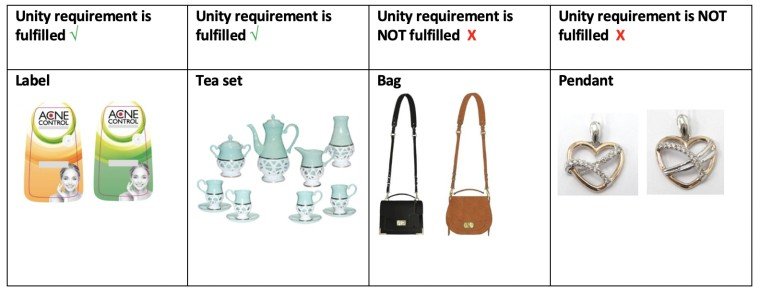
A single design application can be filed for a group of designs, provided they comply with the unity requirement. Namely, legal protection can be granted to:
- A group of designs that form a single creative concept and constitute a set (for example, a tea set, a set of furniture etc.); or
- Variants of designs that differ in non-essential features and/or features that determine the combination of colours.
In addition, the aforementioned designs of the group must belong to the same class of the International Classification of Industrial Designs.
If the information relating to a design has already been disclosed by the author, the applicant or another person who received this information from them, the Russian design system provides a grace period of 12 months for filing a design application without affecting patentability due to such disclosure.
The representations of the claimed design can be submitted in the form of photos, drawings or computer-generated pictures. The maximum number of representations acceptable for filing for one design is limited to seven. A 3D model of an article can be also submitted as an option.
The Russian design system allows obtaining protection for partial designs, namely, by filing a design application it is allowed to submit the representations of claimed design with unclaimed elements shown in dotted lines.
Currently, the procedure for patenting an industrial design under the national procedure in Russia takes approximately 4-6 months. The procedure includes both formal and substantive examination conducted by the Russian Patent Office ex-officio; in particular, the Russian examiner verifies the compliance of the claimed design with the patentability criteria of novelty and originality.
It is important to note that the Russian design system does not provide for deferment of publication of a design application (by default the publication occurs after payment of the official grant fees and issuance of a design patent); however, the deferment can be achieved implicitly by using some procedural possibilities.
The term of validity of a design patent is five years counting from the application filing date and can be extended for further periods of five years, with a maximum term of validity 25 years.
The scope of legal protection of a design in Russia is determined exclusively by the representations of the design reflected in the design patent.
International design registration (Hague system) designating Russia
Russia is a member of the Hague system for the International Registration of Industrial Designs; thus, a design protection can be obtained in Russia by filing an international design application with WIPO and with designating Russia as the country where the applicant wishes to gain protection.
The approach to consideration of international design applications by the Russian patent office is the same as that applied to consideration of national design applications. However, from a procedural perspective, a national design application may be more advantageous for applicants.
Namely, in the case with a national design application the issues connected with non-compliance of the claimed design with the patentability requirements can be resolved on the stage of substantive examination by receiving an official action with an opportunity to submit a response with arguments, and there is a further possibility to appeal a negative decision before the Chamber of Patent Disputes of the Russian patent office (the body responsible for consideration of administrative disputes). While in case with an international design application such issues will give grounds for issuance of a decision of refusal with the applicant having only the opportunity to appeal the decision before the Chamber of Patent Disputes.
The said difference is illustrated in the example below:
The international design registration “Decorative pattern for surfaces” pictured below was refused by the Russian patent office because the claimed title of the design did not include an indication of the article of which the claimed design forms a part of and therefore it did not comply with the definition of the industrial design as set forth in Russian law.
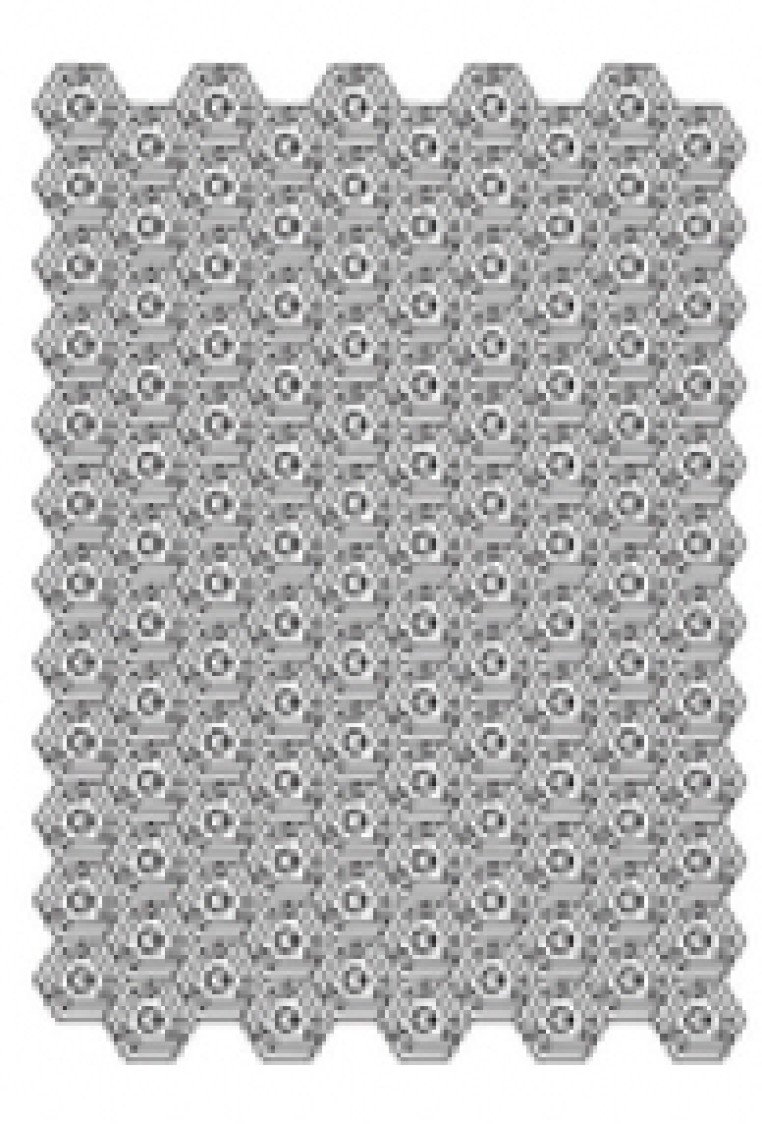
The solution for this case was rather simple: the applicant requested to amend the title to “pattern for packages”, which was acceptable. However, in order to overcome the refusal, the applicant had to file an appeal with the Chamber of Patent Disputes with a request to amend the title.
If such a refusal had been issued by the Russian patent office in frames of a national procedure the applicant could have requested an amendment of the title at the substantive examination stage and get a favourable decision without the need to initiate an appeal.
By designating Russia in an international design application, one should keep in mind some peculiarities, taking into account the declarations that the Russian Federation made upon joining the Hague system:
- The Russian design system does not provide for deferment of publication of a design application; therefore, if the Russian Federation is designated in an international design application, it is not possible to request deferment of publication of the international registration;
- The Russian design system provides for the requirement of unity in relation to a group of designs claimed in one design application. In case of non-compliance with the unity requirement, the Russian patent office will issue a provisional refusal in respect of an international design application, with an opportunity to file divisional applications;
- Where a conventional priority claim was made in the international design application, the applicant must submit to the Russian patent office a certified copy of the first application in original within three months from the date of publication of the international design application. The representations in the international design application must strictly correspond to the representations in the certified copy of the first application; and
- A change in ownership of an international design registration recorded in the international register shall not have effect in the Russian Federation until the applicant submits documents confirming the change to the Russian patent office.
Other important conditions concerning the provision of legal protection under the Hague System in Russia can be found in the profile of the Russian Federation on the WIPO website in the Hague system section.
Eurasian design patent
Russia is a member of the regional Eurasian design protection system, which is regulated by the Protocol on the Protection of Industrial Designs to the Eurasian Patent Convention (EAPC).
The Eurasian design patent provides a unified protection in eight member states, namely: Russia, Armenia, Azerbaijan, Kyrgyzstan, Kazakhstan, Belarus, Tajikistan and Turkmenistan.
Starting from June 1, 2021, applications for a Eurasian design patent can be filed with the Eurasian Patent Office (EAPTO) located in Moscow. It should be taken into consideration that applicants not domiciled in member states of the protocol should be represented by Eurasian patent attorneys duly registered with the EAPTO.
The registration procedure actually takes about 4-5 months, if no opposition is filed.
The following essential features of the Eurasian design system should be taken into consideration when elaborating a design patenting strategy:
- Public disclosure of a design will not affect patentability if a Eurasian design application is filed within 12 months from the date of disclosure;
- A multiple application is allowed. A Eurasian design application can include up to 100 designs in a single application provided they all belong to one and the same class of the Locarno Classification;
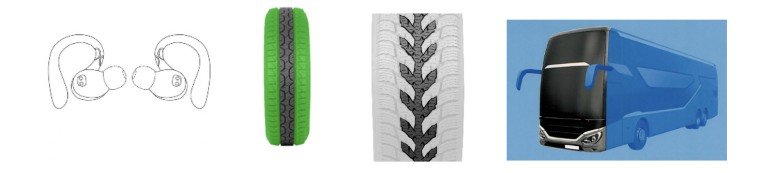
- Partial designs are allowed (the elements of a design for which protection is not claimed can be shown by dotted lines or colour marking/shading/blurring). Examples of acceptable representations with disclaimed parts:
- The Eurasian Patent Office accepts priority documents submitted using the WIPO Digital Access Service (DAS);
- A Eurasian design application undergoes both preliminary and substantive ex-officio examinations. If the results of the preliminary examination are positive, the application is published for opposition purposes with no possibility to defer publication;
- In the event of a refusal to grant a Eurasian design patent, the application can be transformed into a national design application in respective member states of the protocol;
- The term of validity of the Eurasian design patent is five years (counting from the application filing date) and can be extended for a further period of five years. The maximum term of validity is 25 years. The extension is made in respect of all member states where the patent is valid;
- Eurasian design is subject to temporary legal protection during the period starting from the publication of the design application until the publication of the granted Eurasian design patent;
- Assignment of the Eurasian design patent is possible only in respect of all member states where the patent is valid; and
- The Eurasian design patent is enforceable according to national laws and procedural rules applicable to national design patents in the member state where the infringement occurs.
Taken together, these features make the Eurasian system a practical option for applicants seeking design protection in several member states through a single filing and examination procedure. At the same time, the territorial scope of the patent and certain procedural limitations, including the absence of deferred publication and the requirement that assignment cover all member states where the patent is valid, should be taken into account when choosing between the Eurasian and national filing routes.
Conclusion
The availability of national, international and regional filing routes gives applicants considerable flexibility in building a design protection strategy for Russia.
A national Russian application may be preferable where protection is required primarily in Russia and greater procedural flexibility during examination is important. The Hague system can be convenient for applicants seeking protection in several jurisdictions through a single international filing, although the particular requirements applicable to Russia should be taken into account in advance. The Eurasian system, in turn, may be attractive for businesses interested in obtaining design protection simultaneously in Russia and other Eurasian countries through one regional application.
For foreign companies entering or already operating in the Russian and Eurasian markets, design protection should therefore be considered at an early stage of product launch planning. In practice, the filing strategy should be determined before disclosure or market launch, taking into account the territories of commercial interest, the number of designs involved and the procedural features of each available route.
About the author

Law firms