

IP Week @ SG: Why owning IP is no longer enough in the intangible economy
27 August 2026
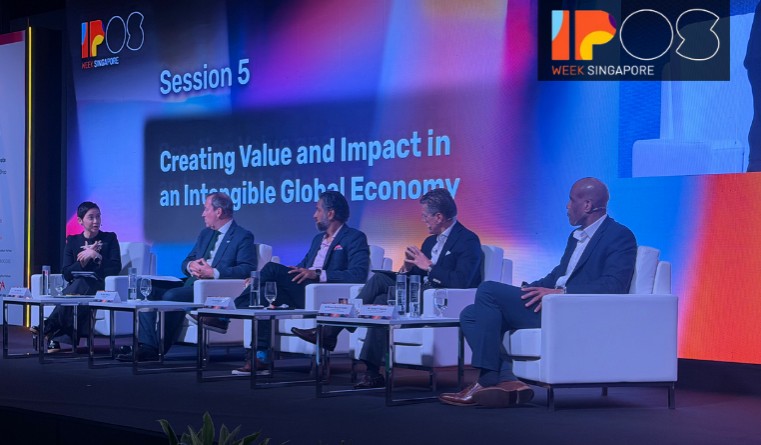
The growing importance of intangible assets in the global economy is raising difficult questions about how intellectual property can be converted into tangible commercial value.
Those questions were explored during the panel discussion “Creating Value and Impact in an Intangible Global Economy” at the Global Forum on Intellectual Property, part of Singapore IP Week, where experts examined the growing disconnect between owning IP and successfully monetizing it. Moderated by Lorraine Tay, a partner at Bird & Bird, speakers also explored how artificial intelligence is reshaping intellectual property strategies, valuation models and regulatory frameworks.
According to the panel, the global economy is becoming increasingly dependent on intangible assets such as technology, software, data and brands. Recent research from the World Intellectual Property Organization (WIPO) found that investment in intangible assets continues to rise globally and now represents a major driver of innovation-led growth.
Opening the discussion, Etienne Sanz de Acedo, CEO of the International Trademark Association (INTA), said that many companies still fail to treat intellectual property as a strategic business asset.
“CEOs understand the importance of brands,” he said, noting that boards often continue to view them merely as accounting line items rather than assets requiring active management. He observed that while awareness of IP’s importance has improved worldwide, a significant gap remains between recognizing value and systematically commercializing it.
That commercialization challenge was a recurring theme throughout the discussion.
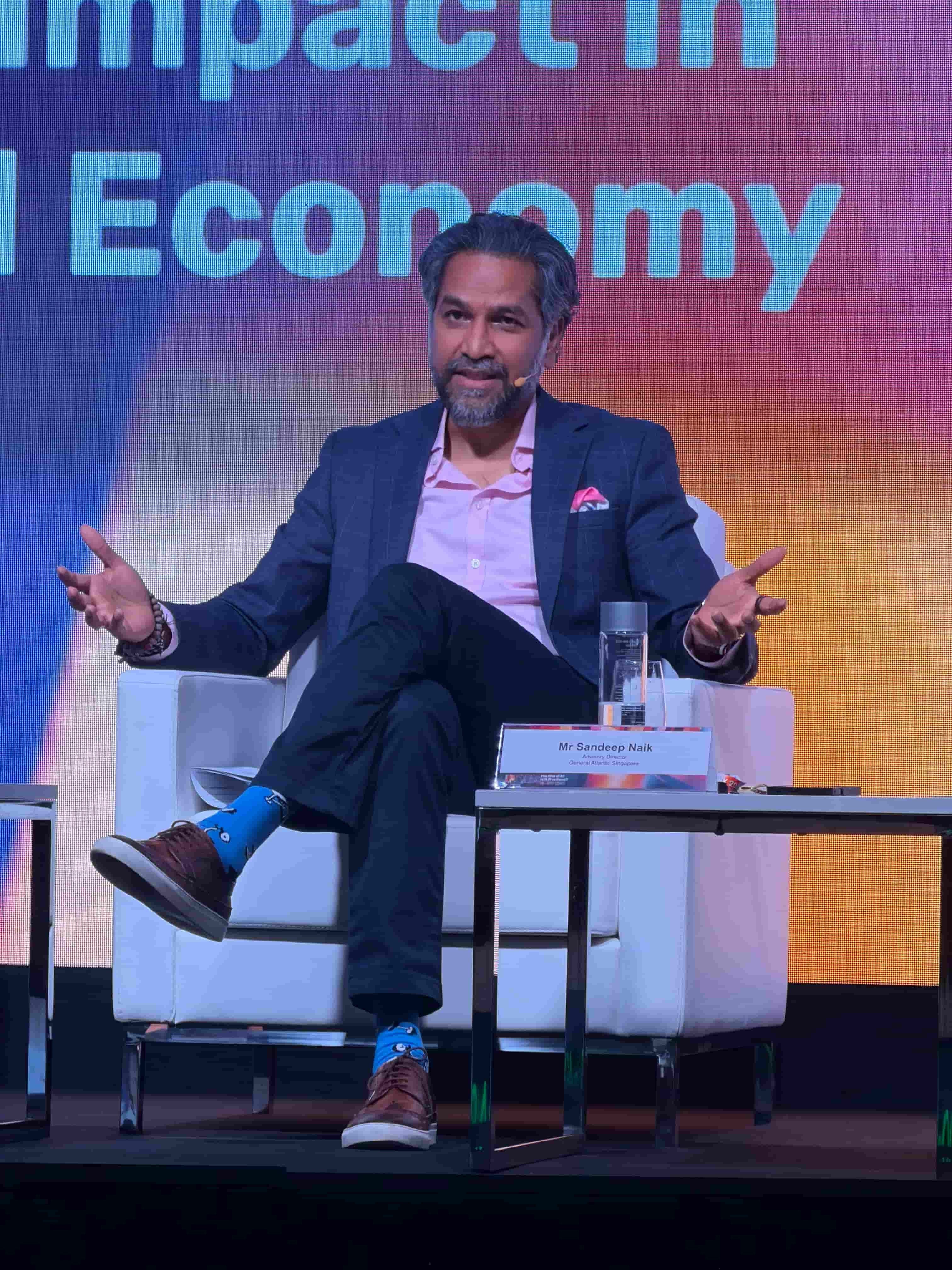
Sandeep Naik | advisory director of General Atlantic
From the perspective of investors, Sandeep Naik, advisory director of General Atlantic, said that ownership alone does not create value. “A list of patents is worthless to an investor unless the company can articulate its commercial mode and addressable issues.” Investors need confidence that IP claims are verifiable, can withstand competitive scrutiny and can be independently valued.
Naik also warned of what he called “stroke of the pen” risk, where a successful infringement challenge or legal ruling can rapidly destroy what appears to be a substantial asset base. “A stroke of the pen can reduce equity value to zero,” he said, emphasizing the importance of robust legal protection alongside commercialization strategies.
For startups and university spinouts, the biggest obstacle is often moving innovations beyond the patent stage.
Joseph K. Hopkins, founder and CEO of Fallingst Technologies, stressed that patents only begin creating economic value when they are transformed into products and services. “Patents are just paper until they are productized into hardware, software or commercial services.” Founders, he said, must focus on building defensible business models rather than simply accumulating patent filings.
The panel highlighted a particularly difficult financing gap affecting university-generated intellectual property. While universities are highly effective at producing research and patents, the speakers said many innovations never reach commercialization because funding disappears between laboratory research and market-ready products.
The United States has developed stronger commercialization pathways than many other countries, but significant gaps remain elsewhere, Naik pointed out. He suggested that governments and philanthropic organizations could play a larger role in providing “bridge financing” to help promising technologies reach incubator and early-market stages. He pointed to institutions such as A*STAR in Singapore as examples of organizations that could help support this transition.

Adam Williams | CEO of UK IP Office
Government support mechanisms are beginning to emerge in some markets. Adam Williams, CEO of UK IP Office, highlighted efforts in the United Kingdom, noting that the British Business Bank has made up to £500 million (US$679.4 million) of existing ENABLE Guarantee capacity available over an initial 12-month period to support lending to IP-rich smaller businesses.
Williams said that public institutions can help expose policy gaps and encourage market development, even when they are not direct lenders themselves.
The conversation then turned to the transformative and potentially disruptive impact of artificial intelligence.
One of the most significant developments, according to Naik, is a growing shift toward trade secrets rather than patents. “In an AI-driven world, structured patent text provides perfect input for machine learning models,” he said. As a result, some companies are becoming more reluctant to publicly disclose innovations through patent filings. However, that strategy comes with trade-offs. While trade secrets may offer stronger protection against AI-enabled replication, they can also make valuation more difficult because outside investors cannot easily assess undisclosed assets.
Hopkins cautioned against over-reliance on generative AI in professional valuation work. Referring to tools such as ChatGPT and Claude, he warned that AI-generated valuation reports currently lack the credibility expected by lenders and institutional investors. Reliable valuations must continue to rely on established methodologies including market-based, income-based and royalty-relief approaches.
Panellists also distinguished between companies building genuine technological breakthroughs and those merely creating interfaces around existing large language models.
Naik said that many AI startups are simply creating “wrappers” around foundational AI systems, whereas breakthrough intellectual property can be seen in advancements such as protein discovery and synthesis technologies pioneered by organizations including DeepMind.
For patent offices and regulators, AI introduces a different set of challenges.
According to Williams, IP agencies are already experiencing an influx of high-quality patent applications generated or assisted by AI systems. “Patent offices are seeing an increase in high-quality applications drafted by AI,” he noted, creating operational pressures while reinforcing the need for human oversight in decision-making.
The discussion identified several unresolved policy questions that governments around the world are still struggling to answer, including ownership of AI-generated content, rights over training datasets, liability allocation among developers and users, and how international standards might ensure cross-border interoperability.
Despite those uncertainties, speakers agreed that human creativity remains the foundation of economic value creation.
Sanz de Acedo said organizations must integrate IP into business strategy from the earliest stages of development and communicate its value more effectively to investors, boards and policymakers. INTA, he shared, is expanding workshops and advocacy efforts focused on IP valuation and finance standards.
The panel’s overall conclusion was clear: in an economy increasingly dominated by intangible assets, success will depend not on how much IP an organization owns, but on how effectively it can demonstrate, protect, finance and commercialize that intellectual property. As AI accelerates the creation and dissemination of knowledge, the ability to transform ideas into measurable and defensible economic value may become the most important competitive advantage of all.
- Darren Barton in Singapore