


Indian court ruling in 13-year patent case shows why proof of rights is important, says IP lawyer
16 October 2026
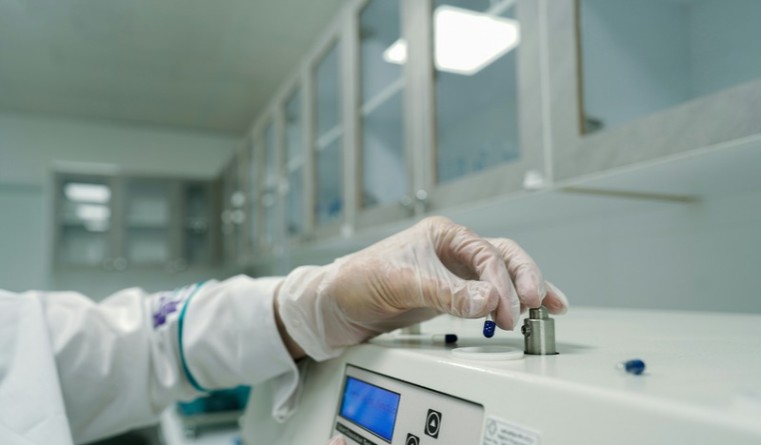
On September 8, 2026, the Bombay High Court sided with scientist and inventor Tarkeshwar Chandrakant Patil in its judgment over a 13-year patent dispute involving a biomedical invention, the Indian Institute of Technology Bombay (IITB) and ownership as a major issue.

Sneha Gandhi | a partner @ Obhan Mason, New Delhi
According to Sneha Gandhi, a partner at Obhan Mason in New Delhi, the court’s judgment highlights the importance of proof-of-right documents and how ownership disputes can prevent a party from securing a patent for an otherwise patentable invention.
In its ruling, the High Court named Patil as the owner of the invention “An Apparatus and a Method for In-Vivo Power Generation”, a biomedical technology that allows power generation for devices placed inside a person’s body for healthcare purposes. The ruling also said Patil is the rightful applicant for the patent registration being sought in India and for registrations to be sought in other jurisdictions.
IITB filed the patent application for the invention in India on August 28, 2013, naming it as the applicant and Patil as principal inventor. Patil undertook research for the invention at IITB, where he worked as a research assistant beginning in June 2008.
Section 7(2) of the Indian Patents Act, 1970 states that applicants who are not the original inventors should obtain proof of right from every inventor involved in the invention. Such proof of right must be filed promptly. IITB failed to obtain such proof of right.
In 2017, IITB executed an assignment deed transferring rights, title and interest in the invention to Patil. However, it said these rights apply only in the U.S., where patent applications were also filed, and not in India. Patent rights were subsequently granted to Patil in the U.S.
The court’s judgment in September awarded rights, title and interest to Patil as inventor and applicant, not just in the U.S., but also in India and all other jurisdictions where the scientist seeks to file patent applications for his invention.
“The Patent Office had refused the application because IIT Bombay had not filed proof of right from one of the inventors, as required under Section 7(2). In practice, we have observed that, if this requirement is not met at the filing stage, the application can encounter serious difficulties later, particularly if the relationship between the inventor and the applicant deteriorates,” Gandhi shared. “As a side note, the Indian Patent Office has largely addressed this issue, as a substantial extension fee now applies if the six-month deadline from the application date for filing proof-of-right documents is missed.”
“Also, where students, research fellows, funding agencies and institutions are all involved, applicants should determine ownership of the invention before filing and document the arrangement,” Gandhi added.
According to her, the Bombay High Court’s judgment is also significant for the interpretation of “wrongful obtainment” under Section 25(1)(a) of the Patents Act, 1970. “In this matter, the Patent Office had treated wrongful obtainment as arising only where an application is filed without the inventor’s knowledge. The key takeaway from this ruling is that an assignor who continues to prosecute a patent application after assigning it can be held to have wrongfully obtained the invention, even though the application was originally filed with the inventor’s knowledge,” Gandhi explained.
- Espie Angelica A. de Leon