


Disney+ and Malaysia’s Astro media group expand content exchange amid IP questions
23 July 2026
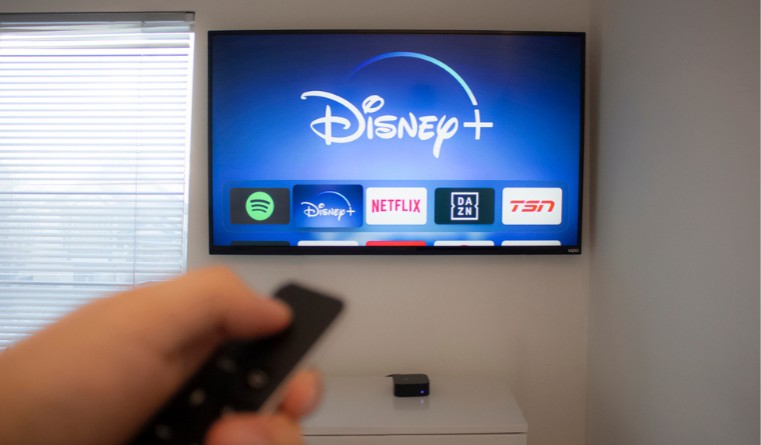
Astro, Malaysia’s leading content and entertainment provider, and Disney+ have expanded their collaboration, bringing more Disney+ titles to Astro’s platforms and showcasing a curated slate of Astro’s locally produced content and popular Malaysian shows on Disney+.
Under the expanded collaboration, a wider selection of Disney+ movies, series, and originals will be available across Astro’s platforms, including Astro TV, Astro GO and NJOI. In return, a curated lineup of Astro Originals and popular Malaysian productions will be featured on Disney+, giving local stories greater visibility to audiences on the streaming service.
While such partnerships create new opportunities to amplify local content and reach broader audiences, they also raise important intellectual property considerations. As content moves across multiple platforms, territories and distribution channels, rights holders and streaming providers must navigate increasingly complex issues surrounding licensing, copyright ownership, territorial rights, exclusivity, royaltie, and the use of underlying third-party intellectual property.
-content_original.jpg)
Yang Shuh Gooi | a partner @ Skrine, Kuala Lumpur
“The biggest and most obvious IP issue with a cross-licensing deal like this – which is typical in all licensing deals – is defining the scope and permitted uses under the licence,” said Yang Shuh Gooi, a partner at Skrine in Kuala Lumpur. “Sharing each other’s IP under a reciprocal agreement is, essentially, giving up a level of control over the owner’s exclusive rights. This can range from something as visible as how each party’s trademarks are displayed (a certain level of co-branding is surely permitted) down to as granular as how each other’s titles can be marketed (is sharing short clips of Astro’s shows on Disney’s social media permitted?). If there are no guidelines or the terms are ambiguous, it can lead to both parties wondering who can do what with the other’s content throughout the partnership.”
He posed a question on ownership over any new derivative works which may be made in the course of the agreement – for instance, Astro creates (and is permitted under the deal to create) a localized version of a poster for a Disney+ title: Who owns the copyright in that poster? Astro? Disney? Both?
“Joint ownership sounds fair on paper but can be complicated long-term. Depending on the type of IP, joint owners may be able to exploit the work independently without revenue sharing, but may not be allowed to license without the other’s consent,” he said.
He added that enforcement could also become messy. “Ideally the licensing deal will address whether the licensee has the right to sue for and on behalf of the content owner, in the event they discover any infringement in their local jurisdiction. The most crucial part of that discussion is how will these enforcement actions be funded (will the costs be shared jointly?) and how will any monetary awards granted by the court be distributed between licensor-licensee,” he said.
Clearance is another, which is especially relevant for any music used in film and TV shows. “Local film and production companies usually obtain sync licences with a specific defined scope that may limit usage to domestic release only or to certain contractually agreed streaming platforms only. The current terms of the licence may, thus, not cover global streaming or sublicensing. Astro and Disney would thus have to go back through the chain of title to confirm whether their existing clearances allow extending to a new platform and new territories. Otherwise, this deal may inadvertently lead to a lawsuit from the underlying copyright owner,” said Gooi.
Another (less IP but more commercial) issue is that the line between competitor and partner can become blurry. “Both Astro and Disney own their own catalogue of movies and shows and are operators of their own respective streaming platforms. By granting access to their exclusive and proprietary content to the other, they are in a sense helping the other build a competing product or service. End consumers may then rather just subscribe to one streaming service, rather than both, since they will be able to access both providers’ content from just one,” he said.
Licensing content to global platforms
When licensing content to global platforms like Disney+, Gooi said that the best way for creators to maximize the value of their IP is to really have a grasp on how much their content is worth and negotiate the licence fees accordingly. “While bargaining positions may feel unequal, it is worth pushing past a flat fee arrangement to ask for a royalty cut. Streaming economics reward volume and repeat viewership. While agreeing to an upfront one-off fee may provide security, it could leave a lot of long-term revenue on the table.”
Another more intimidating way is for creators to make sure the rights they are granting do not bundle all rights under one deal. Gooi said that global platforms will often propose a broad, all-territory, all-format, all-platform licence because it’s operationally simpler for them. “Local creators will feel pressured to accept this. But there’s no reason why a deal for streaming rights should also include merchandising rights, remake or format rights, which the creator may not realize without reading the fine print.”
He added: “Underpinning all this, of course, is that local creators need to be legally represented so that they are familiar with their IP rights and the contract terms they are agreeing to. Far too often, local creators enter into deals with distributors and platforms without reading and knowing what they have signed off.”
He added that it might be overreaching to call this one partnership alone proof of an industry-wide shift. “However, I do believe the direction it points to appears consistent with what recent and broader data is showing,” Gooi said.
Ampere Analysis found that 39 percent of movies and TV seasons available on U.S. streaming platforms as of July 2025 were available on at least two services. The analysis also found that the share of titles simultaneously available on at least three services rose from 9 percent in 2020 to 21 percent in 2025. “This suggests that the exclusivity-first model of the early streaming wars has been slowly eroding. I believe this is because streaming platforms are finding that the best way to grow their subscriber base is to increase their content. In which case, licensing content from others is the most reliable way of doing that; while at the same time licensing content to other platforms also gives an additional revenue stream.”
“The Astro-Disney+ deal fits this pattern, but with a regional inflection. This is a two-way exchange between a global IP owner and a local one, where the local partner’s content is being treated as a valuable asset potentially on par with that of the global platform. It suggests that global platforms are increasingly valuing regional storytelling as content worth acquiring for international audiences.”
- Excel V. Dyquiangco