

IP strategy in the Philippines: The MSME perspective
30 September 2025

After achieving a certain level of stability and growth, micro, small, and medium enterprises tend to begin paying attention to their intellectual assets. Editha R. Hechanova and John Raphael Riel provide case studies of how three successful MSMEs in the Philippines have protected their IP.
Sometime in 2020, our law firm participated in a research project initiated by the Economic Research Institute for ASEAN and East Asia (ERIA) on the level of awareness of intellectual property of micro, small, and medium enterprises (MSMEs). Currently, 99% of businesses in the Philippines are MSMEs, contributing about 40 percent to the gross domestic product (GDP), supporting around 60-67 percent of total employment. They are vital to the national development and growth of the country and provide economic activities such as retail, manufacturing and services. It must also be noted that a major portion of MSMEs are led by women, emphasizing gender equality in the country. As to the level of awareness, most of the entities surveyed were acquainted with IP but felt they needed more training, their main concern being to grow the business and earn income first.
However, after achieving a certain level of stability and growth and now threatened by copycats, MSMEs start looking more closely at their intangible assets and ways of protecting those intangible assets and their market. This may not be the ideal situation, but it is certainly not without remedy. For most start-ups, particularly those involving government-funded inventions, the commercializing inventor is given various training on IP creation, protection and commercialization. Some examples follow.
Healing Galing
Healing Galing is a show aired on Philippine television every Saturday, hosted by veteran broadcaster, journalist and naturopathy practitioner Dr. Edinell Calvario, who shares information and offers advice during on-air telecasts about naturopathy or naturopathic medicine employing a wide array of organic treatments with emphasis on diet and lifestyle counselling. Calvario is also the founder of E.C. Healing Well Corporation which produces a variety of health products, including soaps, coffees, massage oil, eye drops, vitamins and food and health supplements and distributes them under the Healing Galing brand.
It came to the Calvario’s knowledge of that clips of her Healing Galing episodes produced by its sister company Living Green Healing Productions, Inc., were being shown on Facebook by other entities that were selling products not known to her under the Verticure and Innercure brands. The infringers claimed that its Innercure product is an alternative medicine to remove gallstones without the need of surgery. On the other hand, Verticure is a medicine for anxiety, migraine, stress, stroke, dementia, blurry eyesight, depression, dizziness and vertigo. Shown below are the video clips:

Original Video showing Dr. Calvario on the right interviewing a guest (Courtesy of E.C. Healing Well)

Fake video showing inserted captions in Tagalog stating that Innercure helps in melting gallstones.
Alarmed, Calvario engaged the services of a law firm and a private investigator to find out the persons behind the Innercure and Verticure and bought samples thru the given contact details. The samples showed identical contents for Innercure and Verticure. The business registrations showed different entities distributing the said products and on visit by the investigator turned out to be real entities but not producing or selling said products.
Eventually, the Facebook postings stopped. To protect its IP, Calvario had her company E.C. Healing Well secure trademark registration for its Healing Galing marks and its variations, as well as had its episodes copyrighted, and continued its Facebook and internet watch for any copying of her persona and consultation episodes, and filing complaints before the National Bureau of Investigation (NBI). Aside from actively enforcing its IP rights, E.C. Healing Well took advantage of broadcast communication and social media in informing its viewers and the general public to be aware of infringers and to report or share any dubious information.
Silca Coffee Roasting Company
Silca Coffee Roasting Company, Inc., has been the roaster and supplier of coffee to top brewed coffee brands, coffee shops, offices and restaurants for more than 20 years. It is a family-owned business founded by Enrile Asuncion which has been operating since 1996; its success in the Philippines can be attributed to decades of family experience in the coffee industry, strong relationships with farmers and traders and commitment to quality and customer needs, summed up in its promise of providing “freshly roasted coffee from our family to yours.”
When Asuncion died, the management of the company went to son Michael P. Asuncion in 2010 with encouragement of his father to grow the business to a level Michael Asuncion thought unachievable. In 2013, Silca built a new factory to meet FDA specifications and HACCP and GMP protocols as well as a traceability feature for all of its products that allows it to trace back the coffee beans to the batch when it was roasted and its source, through the sales invoice. It also embraced technology by purchasing the Sasa Samiac roaster from France and installing digital scales for accurate measurements, ensuring freshness and consistency.
It was also in 2010 that market studies were conducted to determine consumer preferences and competition, and creating and choosing brands to present and highlight the high quality of its products and elegant packaging design.
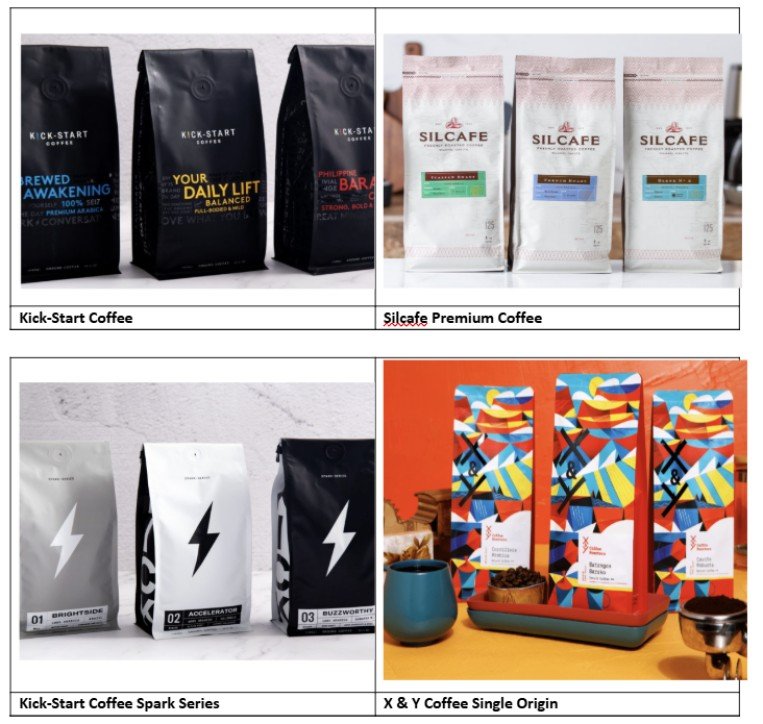
By 2013 after a thorough and painstaking preparation, Silca was confident of the high quality and sustainability of its products and launched it under the Kick-Start and Silca Coffee brands, and being aware of the importance of intellectual property protection, had said trademarks registered with the Intellectual Property Office of the Philippines (IPOPHL). As practiced in the coffee industry, specific roasting profiles, blending recipes, cultivating and sourcing methods are closely guarded trade secrets.
Michael Asuncion highly values the company’s intellectual property and ensures that trademark applications are filed before launching any new product, and even files trademark applications defensively for blends or products still in the ideation stage. Silca has filed numerous applications and, to date, it has 19 protected marks. Its more popular products are shown below:
Silca actively monitors the internet and social media accounts on the use of its marks, and issues, through a law firm, cease and desist letters with undertakings not to repeat the infringing acts. So far, this strategy has worked, and costly litigation has been avoided.
Pili Adheseal, Inc.
Perseverance and hard work really pay-off. This is true for young Filipino aeronautical engineer Mark Kennedy Bantugon, who invented a sustainable aircraft sealant and adhesive from waste of the pili tree (canarium ovatum) and has won some 30 awards, national and international, the latest being one of 10 innovators for the Young Inventors Prize awarded by the European Patent Office on June 18, 2025. This invention has won for him the 2021 James Dyson Award and the distinction of being the first Filipino recipient of the World Intellectual Property Organization (WIPO) National Award for Inventors, the highest recognition given by WIPO. Supported by the Technology Application and Promotion Institute (TAPI) of the Department of Science and Technology (DOST), he entered various competitions where he won said awards and, in 2024, Bantugon established his start-up company Pili Adheseal, Inc., to commercialize his invention.
Bantugon started working on his invention in 2019 while in high school. He came from a farming family and, when heavy rains came, he and his siblings would chew gum to seal the roof leaks of their bungalow. He worked on his invention for several years hoping only to bag IPOPHL’s best thesis award, which did not happen because of Covid-19. Working as an intern in Lufthansa Technik Philippines, he was exposed to the challenges brought by the polysulfide-based sealants commonly used in aviation to prevent fuel leaks, which contained chemical components which could pose health risks to workers, and to the environment, as well. By developing an aircraft sealant obtained from the agricultural waste of the pili tree sap, Bantugon had created a sustainable option that is more eco-friendly, safer for the workers and provided income to about 15,000 local pili farmers.
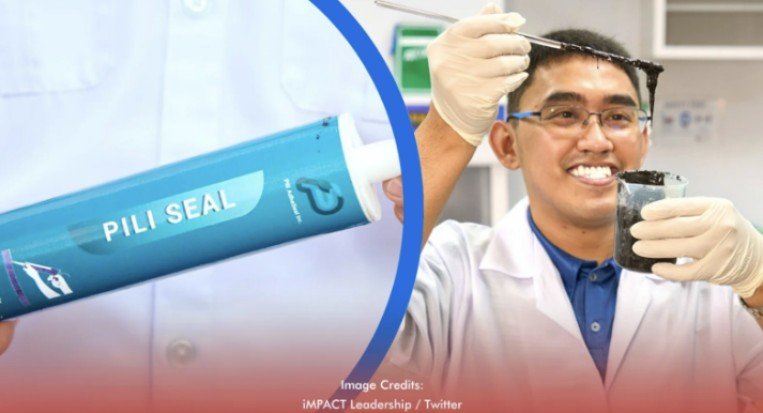
Entrepreneur/inventor Bantugon with his PILI SEAL (from DitoSaPilipinas.com)
Bantugon’s IP strategy can be summed up as follows: He knows he has a sustainable product. What sets it apart from his competitors is that it is over 90 percent bio-based, while those competitors already in the market use only 30 to 50 percent bio-based materials; he has secured a letters patent under IPOPHL’s Youth Intellectual Property Incentive (YIPI) Program in just 18 months from filing. Bantugon saw it best to protect his IP by way of the Patent Cooperation Treaty (PCT) in the United States, Japan, China, Singapore and India, top countries where interest of would-be investors would be higher with the assistance of the World Intellectual Property Organization’s Asia Pacific Division and the Philippine embassies in these countries; he has secured trademark registration for the mark “Pili Seal piling the gap.” With about P15 million (US$264,000) accumulated funds coming from grants and invention competitions, Bantugon has started experimenting in other uses of its product from production to disposal, e.g., as fertilizers. He is also re-engineering his Pili Seal sealant to create more eco-friendly adhesives, as well as finding other uses or applicable technologies, for which he intends to apply for separate patents.
Bantugon’s Pili Seal is on the roll having attracted interest from other sectors, and meeting with potential investors to test his product whether it can stand extreme temperatures and different pressures.
About the author

Law firms