

Singapore High Court elucidates statutory damages in Louis Vuitton ruling
29 September 2025
The Singapore High Court provided helpful judicial guidance on the quantification of statutory damages in a recent decision in Louis Vuitton Malletier v. Ng Hoe Seng [2025] SGHC 122, which will serve as a benchmark for future statutory assessment of damages proceedings with regard to counterfeiting cases under Singapore’s Trade Marks Act. The key issue before the court: how to strike a principled balance between vindicating IP rights and ensuring the award remains proportionate to the infringement.
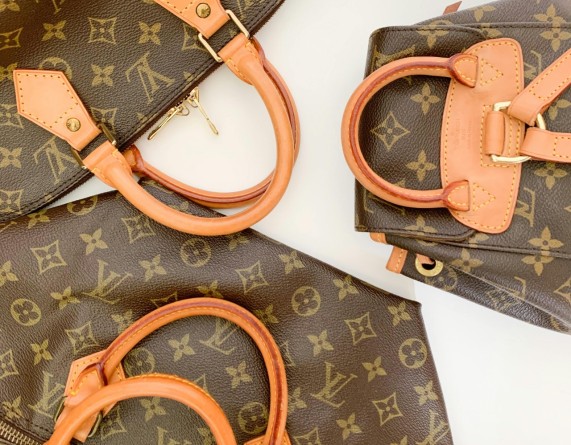
The claimant, Louis Vuitton Malletier, is the registered proprietor of 12 trademarks in Singapore. The defendant operated two Instagram accounts – emcase_sg and emcrafts_sg – through which he advertised and sold counterfeit luxury accessories (including phone cases, wallets and pouches) bearing marks identical to the claimant’s. These goods were marketed as “upcycled” products made from “authentic” Louis Vuitton material.
Upon discovery of the infringing acts, the claimant issued a cease-and-desist letter. When the defendant failed to respond or appear in court, judgment in default was entered. The matter proceeded to an assessment of damages, where the claimant elected to seek statutory damages under provisions of the Trade Marks Act.
The claimant urged the court to adopt the “Canadian scale” of damages, an approach used in Canada to assign fixed sums per act of infringement depending on the nature of the counterfeiting operation. Based on this model, and taking into account 121 infringing acts, Louis Vuitton submitted that damages should total S$4.8 million (US$3.7 million). However, due to the statutory cap in the Trade Marks Act, the claimant limited its prayer to S$2.9 million (US$2.2 million), premised on the use of multiple marks across different types of goods.
The presiding judge declined to adopt the Canadian scale, finding it unsuitable for Singapore’s statutory framework. The court noted that the Canadian scale was developed in a jurisdiction where there was no statutory damages regime and would place disproportionate emphasis on the claimant’s loss, contrary to the multifactorial test set out in of the Trade Marks Act.
The court clarified that statutory damages under Singapore law are not solely compensatory. Instead, they also serve a deterrent function, taking into account factors such as flagrancy of infringement, benefit to the defendant, and broader public interest.
On a proper reading of the Trade Marks Act, the court held that the cap of S$100,000 (US$77,000) applies per type of good, not per mark used, resulting in a maximum cap of S$900,000 (US$694,000) across the nine types of infringing goods. However, after weighing all factors holistically, the court ultimately awarded S$200,000 (US$154,000) in statutory damages, well below the statutory ceiling of S$900,000 as the court found this award to be just and proportionate.
The High Court’s decision offers much-needed judicial clarity on the quantification of statutory damages under the Trade Marks Act. By declining to import foreign frameworks wholesale, the court reaffirmed that Singapore’s IP regime must develop in step with its own legislative context. The judgment strikes a careful balance between deterrence and proportionality, sending a clear message that counterfeiting, particularly in the digital age, will not be met with token consequences but at the same time, statutory damages are to be used proportionately.
This decision also highlights several key takeaways for rights holders and practitioners:
- First, claimants should be prepared to submit evidence addressing all the factors set out in the Trade Marks Act – including, amongst others, the flagrancy of the infringement, benefit to the defendant and broader public interest, not merely the claimant’s loss.
- Second, the court has made it clear that it will not endorse the wholesale adoption of foreign damages models where the local statutory framework already provides a structured and principled basis for assessment. This underscores the need for parties to align their submissions with the structure and intent of the local statutory scheme, rather than relying on jurisprudence developed in materially different legal systems.
- Third, the judgment clarifies that statutory damages are capped per type of good, rather than per trademark used. Rights holders must therefore calculate their claims accordingly, ensuring that damages sought fall within the correct statutory limits.
About the author

Law firms