


IP Week @ SG: Can IP finance unlock Asia’s next generation of unicorns?
27 August 2026
As intangible assets increasingly dominate corporate value, investors, lenders and policymakers are exploring a critical question: How can intellectual property be transformed from a legal asset into a financial one?
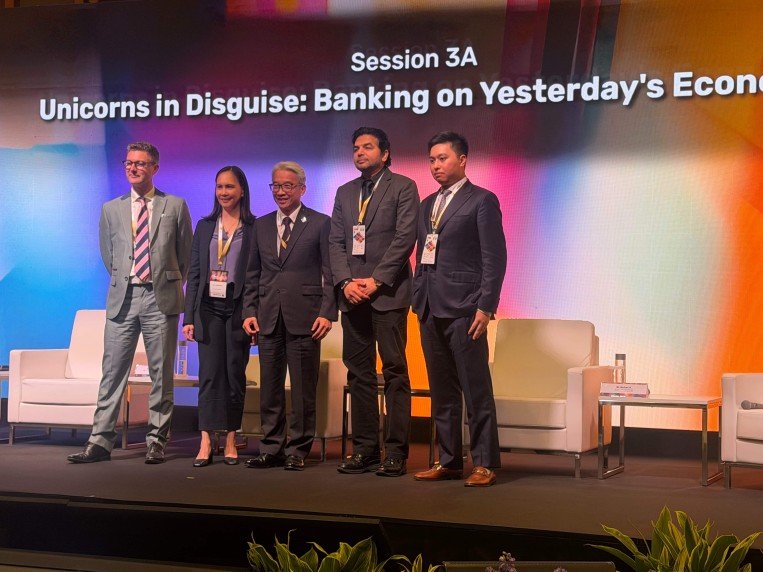
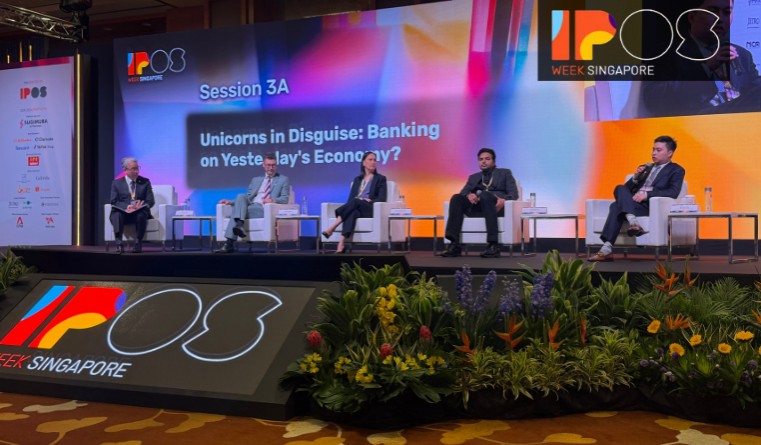
That question took centre stage on August 26 at a session titled “Unicorns in Disguise: Banking on Yesterday’s Economy?” during the Global Forum on Intellectual Property, part of Singapore IP Week, where experts from the banking, investment and IP sectors examined how IP-backed financing could help innovative companies accelerate growth and access capital.

Andre Toh | a partner for strategy and transactions @ Ernst & Young
Led by moderator Andre Toh, a partner for strategy and transactions at Ernst & Young, the panellists agreed that the global economy has undergone a fundamental shift. While traditional lending has historically been built around tangible assets such as property, machinery and inventory, many of today’s fastest-growing companies derive much of their value from patents, software, brands, data and other intangible assets. Industries such as technology, media and telecommunications are increasingly operating with balance sheets dominated by intellectual property rather than physical assets.
The discussion comes at a time when artificial intelligence is altering the economics of content creation and innovation. According to the panellists, AI is creating vast quantities of new content and software, potentially commoditizing some forms of IP while simultaneously increasing the value of proprietary expertise, trusted brands and customer relationships.
Neil Bellamy, head of TMT at NatWest, who helped develop the United Kingdom’s first IP-backed loan product, said that financial institutions must move beyond viewing intellectual property solely as a legal construct. Instead, lenders should focus on how a company’s intellectual property contributes to business performance and future cash flow generation.
“Bankers focus on outcomes,” Bellamy noted, emphasizing that patents, trademarks and other intellectual assets become meaningful when they create sustainable revenue streams and competitive advantage.
A recurring theme throughout the session was that IP valuation remains one of the biggest barriers to wider adoption of IP-backed financing. While investors increasingly recognize the economic importance of intangible assets, accurately determining their financial value remains challenging.
Xavier Ng, senior vice president of GIC, described valuation as “more art than science”, saying that future cash flows, market opportunities and execution capability often matter more than any single valuation methodology. From an investor’s perspective, he noted, the key question is whether IP can support long-term growth and earnings over five to 10 years.
Similarly, Mohan K, managing director of Adastra IP, cautioned against viewing IP portfolios as inherently valuable simply because they contain a large number of patents or trademarks. Strong intellectual property should ultimately be supported by a credible commercial growth story, he said.
The discussion also highlighted the important role governments can play in accelerating adoption of IP finance.
Bellamy pointed to the UK’s use of government-backed guarantee programmes to help banks become more comfortable lending against intellectual property. Such guarantees can reduce regulatory capital requirements and provide financial institutions with an opportunity to gather data and build confidence in IP as a viable asset class.
Malaysia has taken a similar approach. Mohan described a pilot initiative involving the World Intellectual Property Organization (WIPO) and Malaysian Industrial Development Finance Berhad (MIDF), supported by Small and Medium Enterprises Corporation (SME Corp) Malaysia, which helped address challenges associated with valuation costs and funding availability for businesses seeking IP-backed financing.
Beyond valuation frameworks, panellists stressed that institutional culture often presents an equally significant hurdle. Lally Rementilla, founder of IP Investment Partners, who helped establish Canada’s first IP-backed lending platform, argued that successful IP finance requires alignment across multiple functions within financial institutions, including credit, risk assessment and business origination teams. Without that integration, even well-structured lending programmes can struggle to gain traction.
The discussion also examined how financing needs differ across stages of a company’s growth cycle.
For entrepreneurs in the ideation phase, Rementilla encouraged founders to focus on developing a compelling business narrative and a clear IP strategy. Meanwhile, Mohan advised early-stage innovators to secure robust patent protection, particularly in sectors where IP forms the foundation of competitive advantage.
At later stages, access to IP-backed financing can provide companies with the capital needed to accelerate expansion. Bellamy cited the example of British engineering company Dynisma, which used an IP-backed loan to support growth and subsequently secured major contracts with Ferrari, McLaren and Audi.
Sector-specific differences were also highlighted. In media and entertainment, intellectual property can often be monetized through multiple channels, such as adapting video games into films or television franchises. In healthcare and life sciences, by contrast, panellists agreed that strong patent protection is frequently a prerequisite for attracting investment and financing.
Looking ahead, participants identified significant potential for ASEAN to become a major growth market for IP finance. However, achieving that goal will require stronger innovation ecosystems, more consistent valuation standards, supportive regulation and deeper pools of regional capital. Rementilla suggested positioning ASEAN as a single investment proposition to attract larger institutional investors, while others emphasized the importance of legal certainty and government support mechanisms.
Despite differing perspectives on valuation methodologies and financing structures, the panel reached broad agreement on one point: in a world increasingly driven by intangible assets, intellectual property has evolved beyond being merely being a legal right. It is becoming a financial asset capable of powering growth, attracting investment and helping transform innovative startups into the next generation of global unicorns.
- Darren Barton in Singapore