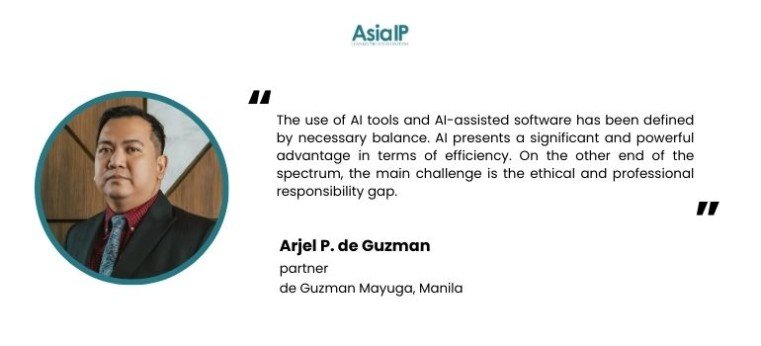
“Thus far, the use of AI tools and AI-assisted software has been defined by a necessary balance. AI presents a significant and powerful advantage in terms of efficiency. On the other end of the spectrum, the main challenge is the ethical and professional responsibility gap. AI output must always be treated as a draft or a research guide, not a final product. A lawyer is ethically and professionally accountable for any ‘hallucinations,’ mostly fabricated case law and prior arts, or even factual errors. Using AI demands higher technical literacy and robust internal protocols to maintain client confidentiality and data security, especially when using third-party, generalist large language models (LLMs),” de Guzman explained.
As for AI uptake in the Philippine legal sector, he said it “leans toward the positive, but with measured traction.”
There’s Digest AI and Anycase.AI, pioneering AI-powered platforms for legal research specifically trained on Philippine jurisprudence. According to de Guzman, the development and adoption of these AI solutions is a critical step that validates the technology for Filipino lawyers.
“In substantial practice though, it is worth stressing that the IP Code has yet to clarify the authorship and ownership of AI-generated works, and the Data Privacy Act introduces complexity regarding client data fed into LLMs. This regulatory ambiguity still encourages a more prudent and cautious approach,” de Guzman noted.
Will AI replace lawyers?
Inevitably, the conversation surrounding AI will turn into talk of whether it will take away jobs, including that of the lawyer or attorney.
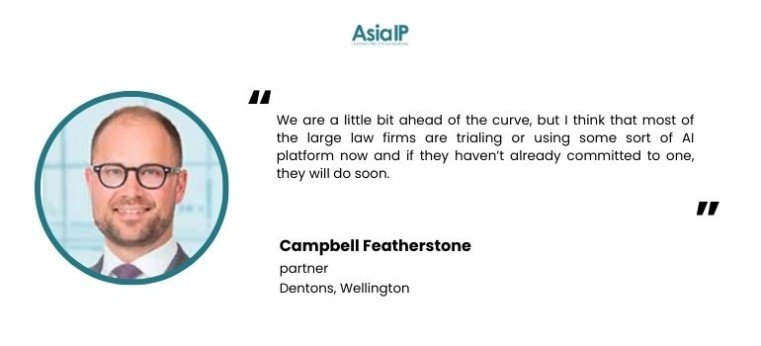
“I think AI may well replace some jobs,” said Featherstone, “but I don’t think it will ever replace good lawyers.” He explained that good lawyers need to have a great understanding of the human dynamics and relationships that drive transactions, disputes and commerce generally. “The AI that I’m aware of can’t do that yet,” he pointed out, “and I’m not sure it will ever be able to.”
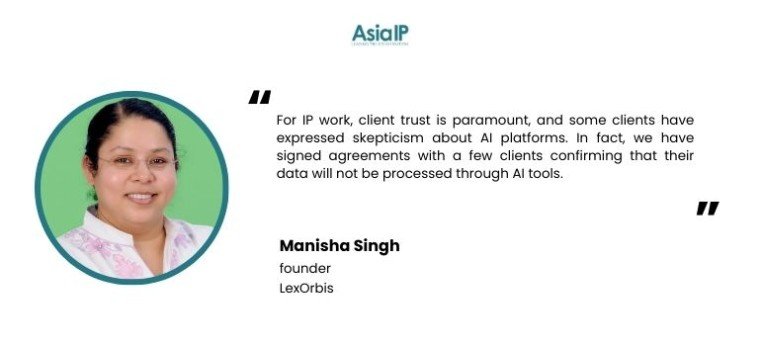
“In our view, AI will function more like a calculator that eases calculations for humans, i.e., an aid that simplifies certain processes rather than replacing human expertise. Legal work, especially in IP, requires nuanced judgment, strategic thinking and client interaction, which cannot be replicated by AI tools,” said Singh.
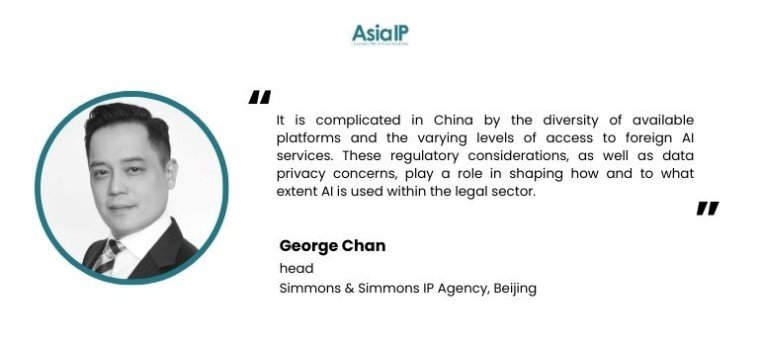
Chan and de Guzman agree.
Chan thinks AI could be capable of handling increasingly sophisticated tasks as the technology advances, aside from the mundane, repetitive desk chores it has started to automate and replace. “But the role of lawyers in providing strategic advice and advocacy, as well as client-facing services, will remain difficult to replace with AI,” he claimed. Thus, he believes more complex and judgment-based tasks will continue needing human expertise, at least for the foreseeable future.
“My take on this is that AI will drive transformation, not replacement,” de Guzman stated. For him, the function of AI remains augmentative.
“In all, upskilling will be the more pressing concern,” he added. “The legal industry will have high demand for AI-enabled supervisors, data analysts and legal technologists who can manage the tools, interpret the data and provide strategic insight. The future of law is a hybrid practice where human judgment steers the efficient machine.”
Has your law office begun adopting AI tools or platforms? If so, to what extent? Or maybe, AI is still largely in its trial stage at your organization, as is the case with some law firms.
“There’s nothing wrong with that,” Featherstone noted, “but my advice to practitioners who haven’t yet engaged with the question of what AI means to their practice is that they can’t ignore the fact that AI is going to make a difference.”