


The Philippines embraces geographical indications
15 January 2026
The debate over the recognition of geographical indications (GIs) is not over and remains as hot as ever due to conflicting economic interests, lack of uniformity in legal systems, and conflict with known and established principles applied to intellectual property rights. The Philippines had taken the stand to recognize GIs by way of a sui generis system. On October 5, 2022, the Intellectual Property Office of the Philippines (IPOPHL) issued Memorandum Circular No. 2022-022 on the Rules and Regulations on Geographical Indications with the objective of enhancing the protection of GIs, and the Philippines, being a member of the World Trade Organization, is under obligation to accord reciprocal rights and protection to geographical indications of other member states.
Under the GI Rules, a geographical indication is any indication which identifies a good as originating in a territory, region or locality, where a given quality, reputation or other characteristic of the good is essentially attributable to its geographical origin and/or human factors. Unlike the trademark rules where any trademark owner can file for the protection of a trademark, the GI Rules limit the applicant to (i) producers or producers’ organizations representing stakeholders directly involved in the extraction, production or manufacture of the goods covered by the GI, (ii) government agencies or local government units responsible for the geographical origin of the goods, as well as representatives of foreign governments, relative to the GIs of its nationals whose laws afford the same right and protection to Philippine nationals, or (iii) organizations or associations of indigenous, cultural communities/indigenous peoples which are specifically entrusted with the task of regulating and or protecting geographical indication.
The IPOPHL registration procedures for GIs are as follows:
-
The applicant shall file an application with IPOPHL, including details of the applicant, geographical indication, applicable goods, description of geographical area, manual of specifications, certification from government agency, and evidence of its link to the specific geographical origin.
-
IPOPHL shall examine the application to ensure compliance with legal requirements and distinctiveness.
-
IPOPHL shall release a registrability report, if any. Should there be a deficiency in the application, IPOPHL will give notice; the applicant has two months from the mailing date to submit a correction.
-
IPOPHL will then publish the registered mark for the submission of the third party observation.
-
If there is no opposition, IPOPHL shall register the geographical indication for protection against its unauthorized use, and enter it in the Register of Protected Geographical Indications. A registered geographical indication is protected for an unlimited term unless revoked. The Rules protect the registered GI against unauthorized use which misleads the public as to the geographic origin of the goods.
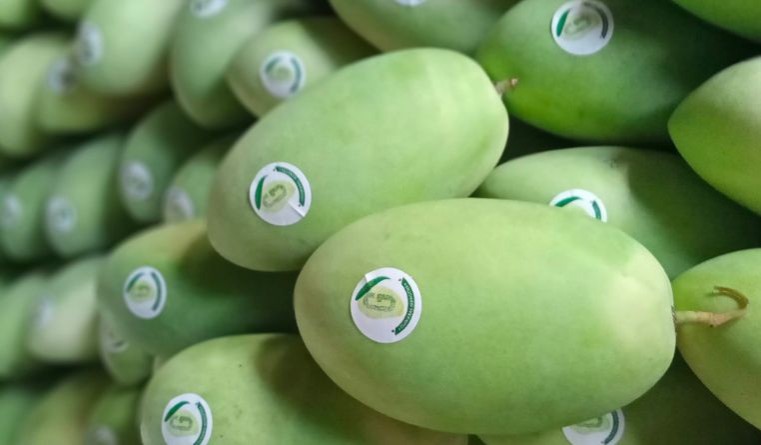
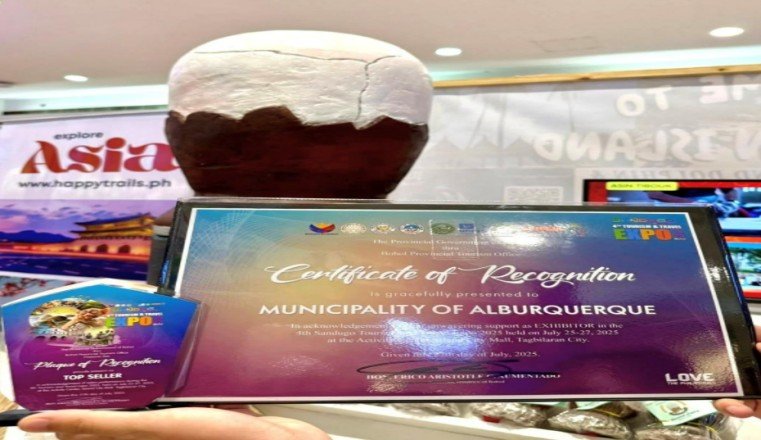
As of the present, the IPOPHL has registered three GIs, namely, Guimaras mangoes, Aklan Piña cloth and the Albuquerque Asin Tibuok, as shown below.
Guimaras mangoes. IPOPHL approved on May 23, 2023, the first Philippine GI applied for by the Guimaras Mango Growers and Producers Development Cooperative. In its Manual of Specifications, the fruit is described as a typical carabao mango variety with an ellipsoid shape and a meaty, juicy flesh. It is thin-seeded and is known for being the sweetest mango in the country. These qualities are attributed to Guimaras’ soil and topography, as well as the climate, which all play a role in the cultivation and production of the mangoes. The manual also provides the rules and standards that must be adhered to by associations to maintain the use of the GI seal.


Aklan Piña. This cloth was awarded GI status in recognition of its unique identity, quality and reputation as a world-renowned textile rooted in the rich tradition and craftsmanship of Aklan. The GI registration was successfully filed and registered by the Aklan Piña and Indigenous Fibers Manufacturers and Traders Association, Inc. (Aklan Piña ManTra). The GI officially links the fabric’s unique characteristics (lightweight, sheer, smooth) to its Aklan origins and protects the craft, tradition and livelihood of Aklanon weavers.

Alburquerque Asin Tibuok. From the province of Bohol, this unique, smoky, orb-shaped artisanal salt is made from burnt coconut husk ash and seawater. It is uniquely linked to Alburquerque, Bohol, preserving its centuries-old, labour-intensive method of filtering ash and boiling brine in clay pots, a long practiced tradition, resulting in a sea salt known as the “dinosaur egg” due to its shape and the broken pot it is cooked in. Seawater is filtered through ash from burnt coconut husks, and the resulting brine is boiled in clay pots until it solidifies into a unique salt mass.
The case of Cordillera heirloom rice


In a research paper entitled “The Potential and Contradictions of Geographical Indication and Patrimonization for the Sustainability of Indigenous Communities: A Case of Cordillera Heirloom Rice in the Philippines” by Kae Sekine, the author showed that recognition of GI may not be all that advantageous, unless certain measures are put in place. Cordillera Heirloom Rice was registered with the IPOPHL in 2018 as a collective mark with a plan to register it as a GI upon the issuance of the Rules. The IPOPHL trademark registry showed three registrations filed by different cooperatives, including the regional office of the Department of Agriculture, but all registrations have expired, most likely due to lack of familiarity with trademark rules and failing to file the required declaration of use.
On three dimensions of sustainability – ecological, socio-cultural and economic –Sekine concludes that the GI and the patrimonization exhibit both potential and contradictions. “While the GI and the patrimonization certainly increase the farmers’ economic opportunities and public awareness of the values related to the heirloom rice and the rice terraces in their inherited ecosystem and culture, these schemes also accelerate the transformation of ecological, social and economic patterns identified in the IP communities. … It would be indispensable that the stakeholders in the GI and patrimonization projects be aware of the limitations of these schemes to realize the three dimensions of sustainability and their incompatibility. … When IP communities are concerned, public authorities need to pay particular attention to avoid over-commodification of their subsistence crops and culture and support these communities to establish the ensuring mechanisms incorporated into the codes of practices of GIs and the action plan of patrimony preservation.”
A Philippine News Agency (PNA) news story on November 26, 2025, reported a deepening move to preserve cultural heritage embodied by the Cordillera heirloom rice, notwithstanding that sustaining heirloom rice production is challenging, e.g., elders find it hard to convince youth to continue the tradition, and faced with the disappearance of some heirloom varieties, the Department of Agriculture is embarking on the Heirloom Rice Development Program beginning in 2026, coordinating with other government agencies and private entities for research, training and marketing and to ensure that farmers will never run out of planting materials.
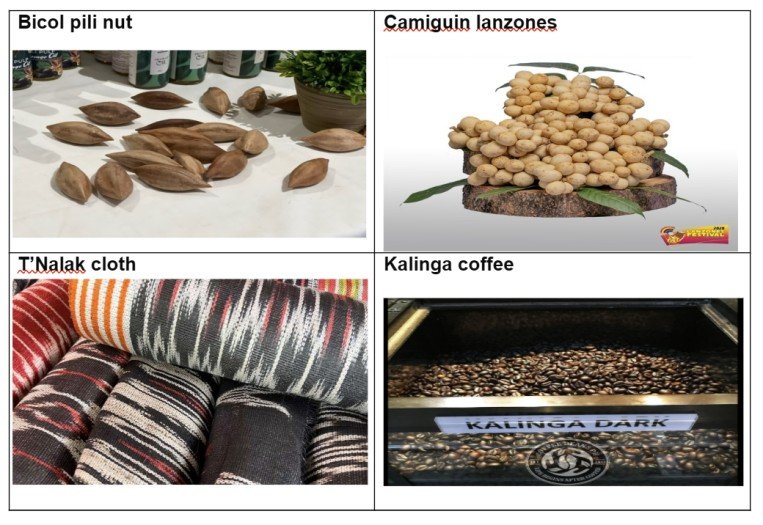
Presently, the IPOPHL is looking at 30 possible geographical indications, some of which are shown below:
Current developments
The IPOPHL’s Bureau of Trademarks, which handles the GI register, is encouraging the filing of GI applications with the view of joining the Lisbon System for the international registration of Appellations of Origin and Geographical Indication. In September 2025, Senator Mark Villar filed Senate Bill No. 1392 – An Act Providing for Protected Geographical Indications of Locally Produced Agricultural or Natural (Unprocessed or Wild) Products, Processed Products, or Any Products of Handicraft or Industry. This bill seeks to provide a stronger regulatory framework by institutionalizing IPOPHL’s current rules on the regulation and registration of GIs. It also introduces penalties for infringing GIs to better protect local producers from acts that tarnish and degrade their reputation for quality production and craftmanship.
About the author

Law firms