

The Register of Well-Known Marks
15 July 2025
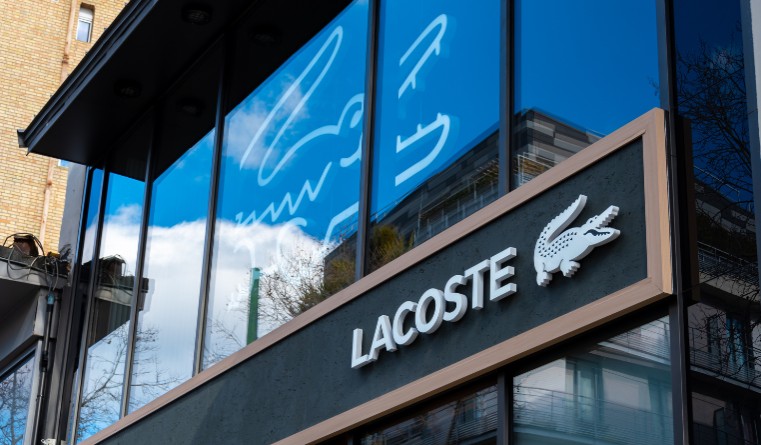
As far back as 1980, then Philippines Minister of Trade Luis Villafuerte issued a memorandum of a list of internationally well-known marks in the Philippines, to protect these famous brands and serve as a guide to the Intellectual Property Office of the Philippines (IPOPHL), then known as the BPTTT, to reject applications for these brands by unauthorized entities. Thereafter, brands were declared well-known as a result of adversarial proceedings such as trademark oppositions, cancellations and actions for intellectual property violations, decided by the IPOPHL or the regular courts. The Villafuerte list (which declared the following marks as well-known: Clavin Klein, Christian Dior, Fila, Geoffrey Beene, Givenchy, Gucci, Jordache, Lacoste, Lanvin, Oscar de la Renta, Pierre Cardin, Ralph Lauren, Sasson, Ted Lapidus, and Vanderbilt) has not been repealed, and the system of declaring marks as well-known in adversarial proceedings continue.
On April 28, 2025, Memorandum Circular No. 2025-009, issued by the IPOPHL took effect, creating the Register of Well-Known Marks and providing the rules for its recognition as well as its revocation. The objective of the memorandum is to enhance the protection of well-known marks against unauthorized use on identical or related goods or services, but also against use on unrelated goods or services provided that a connection between those goods and services and the owner of the well-known mark is indicated, and that the interests of the latter are likely to be damaged.
Similar to the application requirements to secure trademark registration in the Philippines, the applicant to secure declaration of its mark as well-known can be a natural or juridical person. For foreign entities, a Philippine trademark agent must be appointed thru a special power of attorney.
To determine whether a mark is well-known, knowledge of the relevant sector of the public, instead of the public at large, including knowledge in the Philippines which has been obtained as a result of the promotion of the mark, is taken into account. The declaration process is conducted ex parte, similar to a trademark application; the examiner may issue an office action if additional information or clarification is needed. Applicants have two months to respond, extendible by another two months; failure to respond leads to abandonment, but revival is possible under special circumstances. After evaluation, the examiner makes a recommendation, and the Director of Trademarks (DTM) issues the final decision. Once granted, the declaration is published in the E-Gazette.
Within one month of publication of the mark as well-known, any interested party who may be damaged by its declaration may file a Third-Party Observation (TPO). The DTM creates a committee of well-known mark to comment on the TPO and the response of the applicant, if any. The DTM takes into account the recommendation of the committee, the TPO and the response of the applicant, in determining whether to grant the application for the declaration of a mark as well-known, and if granted the DTM issues a certificate of well-known mark declaration, and enter the same in the Register of Well-known Marks.
The declaration of well-known mark is prima facie evidence of the well-known status of the mark with respect to the goods and services stated in the application, and its inclusion in the register will be considered by the examiners in the examination of trademark applications covering related or unrelated goods as provided in the IP Code.
For trademark owners, obtaining a declaration of well-known status is a strategic move that strengthens a brand’s defenses in the Philippine market. It places the mark in a stronger position to prevent the registration of confusingly similar marks – even if those marks cover unrelated goods or services – thereby, protecting brand reputation from dilution or misappropriation.
A well-known mark declaration is valid for 10 years, with the possibility of renewal for successive 10-year terms.
For trademark which have been declared well-known prior to April 28, 2025, a manifestation with proof of continuous use may be filed with the IPOPHL by the trademark owners in order to retain its well-known status. Failure to do so would result in non-recognition in the Register of Well-Known Marks, or the removal thereof.
Is the protection granted to internationally well-known marks absolute? The recent decision of the Supreme Court in Lacoste S.A. v. Crocodile International PTE Ltd. (G.R. No. 223270, November 06, 2023) addresses this question. Lacoste sought to block the trademark application of Crocodile International, a Singaporean company using a different crocodile design with the stylized word “Crocodile”, on the basis of confusing similarity and dilution of Lacoste’s internationally famous “Crocodile Device” mark. Lacoste argued that it commenced using its “Crocodile Device” in the Philippines as early as 1963 when its clothing apparel was first marketed in the country, and said mark is covered by Trademark Registration No. 64239.
Applying both the dominancy and holistic tests, the Bureau of Legal Affairs (BLA) of the IPOPHL ruled that there is no confusing similarity between Lacoste’s and Crocodile’s marks, finding that since Crocodile’s mark is a composite mark, considering the word “Crocodile” in stylized font placed on top of the “saurian” figure, it has striking differences when compared to Lacoste's mark. The Office of the Director General (ODG) of the IPOPHL, the Court of Appeals and Supreme Court affirmed the BLA’s decision.
The Supreme Court ruled that while it is true that: (a) Lacoste's mark is considered as an internationally well-known mark; and (b) Lacoste had first used its mark in the global market in 1933, or years before Crocodile introduced its own mark in 1949, there is no showing that Crocodile in any way – at least on the basis of the evidence presented by Lacoste – defamed or disparaged Lacoste’s mark. In fact, in adherence to their mutual co-existence agreement, Crocodile even facilitated the registration of Lacoste’s mark in different jurisdictions by giving consent to Lacoste’s entry in countries where Crocodile first registered its mark.
It is further not amiss for the court to point out that like Lacoste, Crocodile has taken great pains to acquire goodwill in favour of its mark through its long-established use and intensive promotion in different countries. The court even saw no intent on the part of Crocodile to ride on the goodwill of Lacoste by reason of their long-standing co-existence with one another in different countries worldwide. All told, evidence is wanting as to Crocodile’s capacity to tarnish Lacoste’s mark or even an intent on its part to do so; neither does Crocodile’s mark falsely suggest a connection with Lacoste’s mark so as to blur the distinctive quality of the latter.
he Supreme Court, while acknowledging Lacoste’s international reputation, declined to block the registration, emphasizing that fame alone is insufficient without proof of actual confusion or dilution. The court ruled that the differences between the two marks – particularly in the orientation, design, and word elements – rendered consumer confusion unlikely.
Ultimately, the Supreme Court’s ruling serves as a cautionary tale: the rights accorded to internationally well-known marks, while influential, is not conclusive.
About the author


Law firms