


When urgency meets procedure: The Supreme Court’s game-changing ruling on Section 12A
30 November 2025
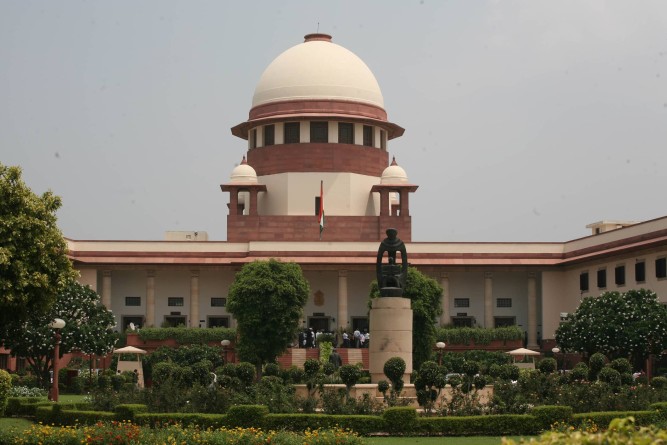
In a landmark ruling that will reshape intellectual property litigation in India, the Supreme Court has clarified that ongoing acts of infringement inherently carry urgency, exempting such suits from mandatory pre-institution mediation under Section 12A of the Commercial Courts Act, 2015.
The judgment in Novenco Building and Industry A/S v. Xero Energy Engineering Solutions Pvt. Ltd. (2025 INSC 1256, decided on October 27, 2025) goes beyond the immediate dispute. It draws a bright line between procedural compliance and substantive justice, affirming that procedural formality should never allow an infringer to profit from delay.
The case that sparked the debate
The dispute began when Novenco, a Danish company known globally for its “ZerAx” industrial fans, discovered that its former Indian distributor had allegedly begun selling identical fans through a shell entity. The products, Novenco claimed, were protected by patents and design registrations, the result of over €3.6 million (US$4.2 million) in R&D investment.
After sending cease-and-desist notices and verifying infringement through an expert inspection, Novenco filed a commercial suit seeking an injunction in June 2024 before the Himachal Pradesh High Court. Along with the plaint, it sought an exemption from Section 12A mediation, citing the need for urgent interim relief.
The High Court, however, refused to entertain the suit. Its reasoning? That a six-month delay between discovering the infringement and filing the case suggested “no real urgency.” The plaint was rejected outright.
That rejection and the strict reading of Section 12A became the pivot for one of the most significant Supreme Court interventions in recent commercial litigation history.
The legal knot: Section 12A and the urgency clause
Section 12A of the Commercial Courts Act mandates that no commercial suit shall be filed unless pre-institution mediation has been attempted, except where the suit “contemplates any urgent interim relief.”
While the clause was meant to encourage early dispute resolution, courts have struggled to define what truly qualifies as “urgent.” In many cases, even bona fide plaintiffs faced dismissal if the court felt that urgency was not established.
The Novenco case gave the Supreme Court an opportunity to answer a simple but vital question: Can delay in filing an IP suit negate the urgency that naturally arises from ongoing infringement?
The Supreme Court’s answer: Urgency is inherent in ongoing infringement
The court’s response was resounding and transformative.
In a judgment authored by Justice Alok Aradhe, the Supreme Court held that every act of continuing infringement constitutes a fresh cause of action. Therefore, urgency doesn’t expire with time; it renews with each infringing sale, manufacture, or advertisement.
The court reasoned that in intellectual property matters, the harm is dynamic reputational, economic, and often irreversible. Each day of imitation corrodes goodwill, misleads consumers, and distorts the marketplace. The urgency lies not in the age of the grievance but in the persistence of the harm.
Significantly, the court expanded the conversation beyond private rights, highlighting that IP enforcement serves public interest. When counterfeit or copied goods flood the market, consumers are deceived, innovation suffers, and the integrity of trade collapses. “The public interest,” the court noted, “becomes the moral axis upon which urgency turns.”
A holistic test for courts
Building on earlier precedents like Patil Automation, Yamini Manohar and Dhanbad Fuels, the Supreme Court distilled a five-point test for evaluating whether a plaintiff is entitled to exemption from pre-institution mediation:
-
Mediation is mandatory, unless the plaint itself discloses a genuine and immediate need for interim protection.
-
The urgency must be evident from the plaint and annexures, not inferred post facto.
-
Courts must look for signs of irreparable injury or imminent harm, not just formal prayers.
-
Pro forma injunction requests intended to bypass mediation will not qualify.
-
Urgency must be assessed from the plaintiff’s perspective, without pre-judging merits.
This framework brings much-needed clarity for both practitioners and courts, reducing the uncertainty that has plagued early-stage IP litigation since 2018.
Balancing speed and settlement
By restoring Novenco’s suit, the Supreme Court has struck a delicate balance: encouraging mediation where possible, but not at the cost of justice where infringement is ongoing. The ruling prevents Section 12A from becoming a shield for infringers, who might otherwise exploit procedural technicalities to prolong violations.
It also sends a clear message to lower courts that procedural rigidity must yield to substantive rights when continued harm is demonstrable.
Why this matters
For IP owners, this decision is a lifeline. It ensures that courts recognize the inherent urgency of ongoing infringement a principle especially vital in industries driven by speed, innovation, and brand value.
For practitioners, it offers a roadmap: plead urgency thoroughly, document continuing harm, and anchor exemption requests in both public interest and market integrity.
And for the judiciary, it provides a stable interpretive compass for Section 12A preventing mediation from degenerating into a mechanical ritual when immediate judicial protection is necessary.
Conclusion: A shift toward realism
The Novenco ruling reaffirms that law must serve justice, not procedure. It recognizes the lived reality of modern commerce where time lost to formality can mean goodwill lost forever.
By acknowledging that continuing wrongs renew urgency, the Supreme Court has not only strengthened IP enforcement but also reaffirmed faith in the court’s role as a protector of fairness and innovation.
In short, the decision transforms Section 12A from a procedural roadblock into a balanced safeguard one that respects both the spirit of mediation and the imperative of protection.
About the author

Law firms