

Voice trademarks in the age of AI: Rethinking brand identity and legal protection
07 September 2026
In an increasingly digital marketplace, brands are no longer recognized solely through their names, logos, or slogans. Consumers identify businesses through a range of sensory cues, including sounds, colours, motion sequences, and even distinctive voices. As artificial intelligence, voice assistants, podcasts, and digital advertising become integral to commerce, a unique voice can function as a powerful source identifier. This raises an important legal question: should a distinctive voice itself be capable of trademark protection?
The commercial value of a distinctive voice
A distinctive voice can be as immediately recognizable as a brand identifier. Consumers frequently associate particular vocal characteristics with specific individuals or brands without needing visual confirmation. Companies invest substantial resources in cultivating recognizable voices for advertisements, virtual assistants, audiobooks, and promotional campaigns precisely because voice creates an enduring brand identity.
A notable example is the American rapper and performer Pitbull, who has obtained trademark registrations in the United States for his distinctive signature yell, commonly represented as “EEEEEEEYOOOOOO.” The registrations demonstrate how a vocal expression, rather than a conventional word or logo, can acquire trademark significance when it becomes strongly associated with a particular performer and functions as a source identifier. The commercial recognition derives from how the expression is performed and heard rather than merely from its written representation. Similarly, at the European Union Intellectual Property Office (EUIPO), Italian singer Giusy Ferreri and musician Andrea Laszlo De Simone have been associated with registrations involving audio marks incorporating their voices. The filing is significant because the protected sign is not simply the words; the application concerns an auditory representation of those words as spoken in the artist’s own voice. These developments are particularly significant in the context of generative artificial intelligence because they demonstrate the increasing commercial importance attached to distinctive vocal characteristics and audio identity.
AI and the need for pre-emptive IP protection
Advancements in artificial intelligence have fundamentally altered the legal landscape. Voice cloning technologies can now reproduce an individual’s vocal characteristics with remarkable accuracy using minimal audio samples.
The emergence of deepfake technology has significantly complicated the protection of individual identity and reputation in the digital environment. Deepfakes use artificial intelligence and machine-learning technologies to create or manipulate audio-visual material in a manner that can make an individual appear to say or do something that never occurred. The technology can reproduce a person’s face, voice, mannerisms, expressions and style of communication with increasing accuracy. Consequently, the traditional distinction between genuine content and manipulated content has become increasingly difficult for consumers and even sophisticated users to identify.
The problem is particularly serious in the case of famous personalities. Celebrities possess commercially valuable identities that may include their names, images, voices, likenesses, mannerisms and distinctive styles of performance. Deepfake technology enables third parties to appropriate these attributes without obtaining consent. The resulting content may falsely portray a celebrity as endorsing a product, making a political statement, participating in an event, promoting a service or engaging in conduct that could damage their reputation. The harm is therefore not restricted to the unauthorized use of an image; it can involve the comprehensive digital appropriation of a person's identity.
The emerging legal challenge is therefore not merely whether deepfakes should be prohibited, but how victims can obtain an effective remedy before the harm becomes irreversible.
A June 2026 BBC News report on voice cloning provides an example of the growing concerns surrounding the misuse and replication of recognizable voices, illustrating how AI-generated audio can blur the distinction between authentic speech and synthetic content.
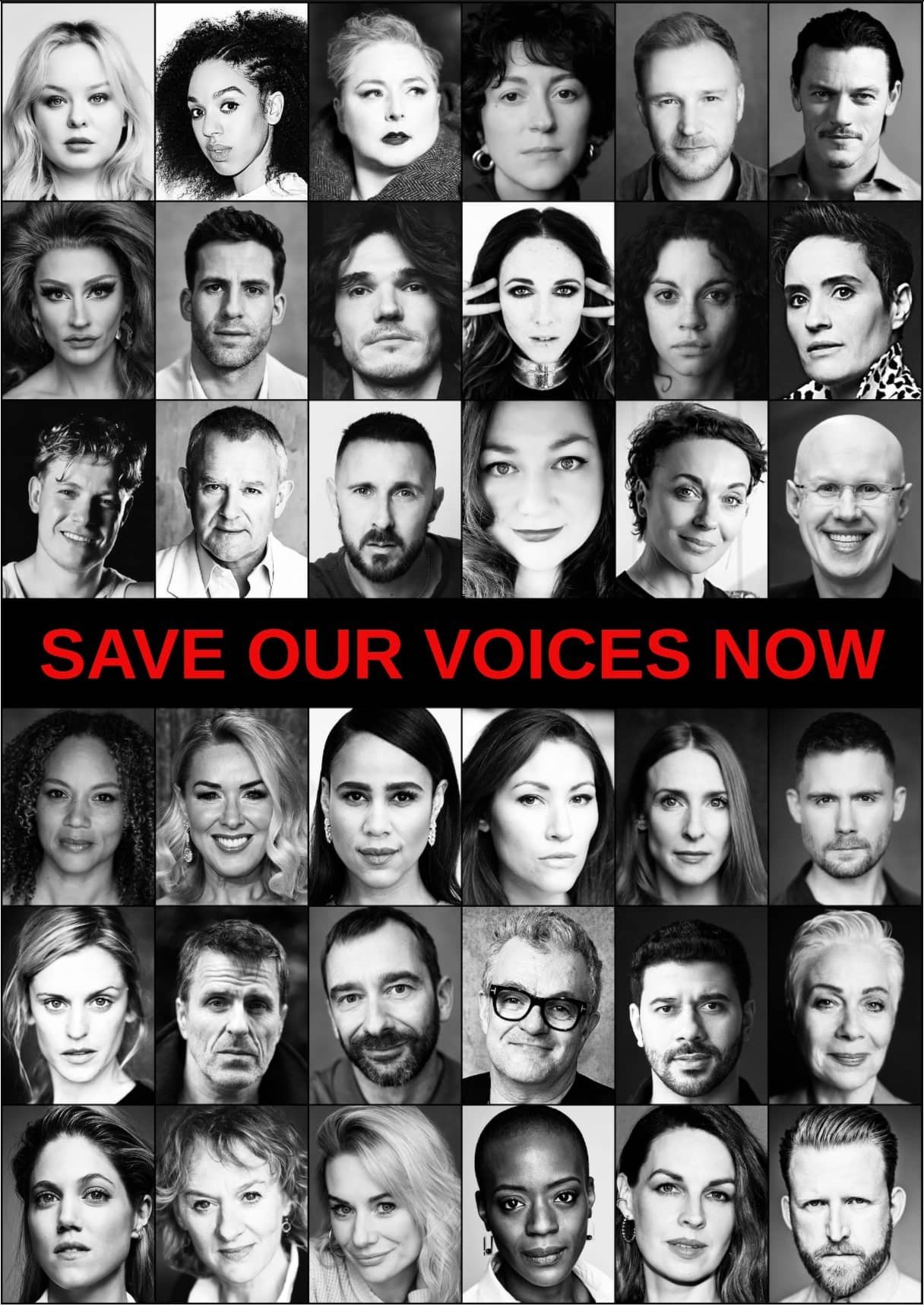
In August 2026, The Guardian reported that prominent actors including Nicola Coughlan, Hugh Bonneville and Matt Lucas had backed the “Save Our Voices Now” campaign against unauthorized AI voice cloning.
In August 2026, The Guardian reported that prominent actors including Nicola Coughlan, Hugh Bonneville and Matt Lucas had backed the “Save Our Voices Now” campaign against unauthorized AI voice cloning. Approximately 80 individuals signed an open letter calling for legislation to protect voice ownership. The campaign emphasizes that a person’s voice is an important component of personal identity and argues that individuals should have greater legal control over the reproduction of their voices through artificial intelligence.
Further, a significant development in this regard is the trademark strategy adopted by Taylor Swift. In April 2026, her company, TAS Rights Management, filed trademark applications before the United States Patent and Trademark Office (USPTO). These applications seek registration of sound marks consisting of her spoken voice introducing herself through the phrases “Hey, it’s Taylor Swift” and “Hey, it’s Taylor.” It is observed that these applications are intended to strengthen her ability to act against AI-generated voice clones, false endorsements, and deepfake impersonations by extending trademark protection to distinctive aspects of her commercial identity.
Taylor Swift is not alone. Earlier in 2026, Matthew McConaughey secured multiple federal trademark registrations from the USPTO covering various elements of his commercial persona, including a sound trademark for his iconic vocal delivery of the phrase “Alright, alright, alright” from the movie Dazed and Confused. The registration protects not merely the words themselves but the distinctive audio recording and manner of expression that consumers immediately associate with McConaughey. His attorneys publicly stated that the registrations were obtained to prevent unauthorized AI-generated reproductions of his voice and likeness while simultaneously facilitating legitimate licensing opportunities involving AI technologies.
These developments are legally significant because they represent a departure from the traditional understanding of sound marks. While historically, sound trademarks protected brand identifiers such as jingles, chimes, or product sounds practitioners now deploy them to protect an individual's distinctive voice where it performs the essential trademark function of identifying commercial origin.
The Indian position
The Trade Marks Act, 1999 already recognizes sound marks as registrable trademarks, provided they are capable of distinguishing the goods or services of one person from those of another and satisfy the statutory requirements of distinctiveness. The depiction of these marks is done through graphical musical notations as per Rule 26(5) of the Trademarks Rules, 2017 which states: “Where an application for the registration of a trademark consists of a sound as a trademark, the reproduction of the same shall be submitted in the MP3 format not exceeding thirty seconds’ length recorded on a medium which allows for easy and clearly audible replaying accompanied with a graphical representation of its notations.”
Indian practice has therefore already accepted that non-visual signs may function as trademarks.
One of the earliest and most well-known examples is the registration of the Yahoo! yodel as a sound mark. Subsequently, ICICI Bank’s corporate jingle, (“Dhin Chik Dhin Chik”) was protected as a sound mark since as early as March 2011. The jingle is being used consistently across its advertising and customer-facing communications, reinforcing the bank’s brand identity through a recognizable audio signature. Further, Netflix has registered their iconic sound mark “ta-dum” in India showing prior use of the mark since 2018.
More recently, in January 2026, the Tata Group’s Indian Hotels Company Limited (IHCL) has secured registration for its sound trademark, “Taj,” marking the first sound mark registration in India’s hospitality sector and underscoring the growing commercial reliance on sonic identity.
Recognition of voice rights by the Indian courts
Indian courts have progressively expanded the doctrine of personality rights to recognize that a celebrity’s identity extends beyond merely their name or image. Decisions such as Anil Kapoor v. Simply Life India & Ors. acknowledge that a person’s voice constitutes an integral component of their commercially valuable persona and is entitled to legal protection against unauthorized commercial exploitation.
The Bombay High Court in Arijit Singh v. Codible Ventures LLP & Ors. significantly strengthened the protection of celebrity personality rights by recognizing that a celebrity’s voice is a distinctive and commercially valuable aspect of their identity. The court held that the unauthorized use of artificial intelligence to clone or imitate Arijit Singh’s voice, along with the misuse of his name, image, likeness and singing style, amounted to an infringement of his personality and publicity rights. Observing that such unauthorized exploitation could mislead the public, dilute the celebrity’s goodwill and cause commercial harm, the court granted an interim injunction restraining the defendants from creating, distributing, or commercially exploiting AI-generated voice replicas or other personality attributes without consent.
Justice Arif S. Doctor, in Asha Bhosle v. Mayk Inc., observed that “In my prima facie view, making AI tools available to enable the conversion of any voice into that of a celebrity without his/her permission would constitute a violation of the celebrity's personality rights. Such tools facilitate unauthorised appropriation and manipulation of a celebrity’s voice, which is a key component of their personal identity and public persona. This technological exploitation not only infringes upon the individual’s right to control and protect their likeness and voice but also undermines their ability to prevent commercial and deceptive uses of their identity.” The court therein reaffirmed that a celebrity’s voice is a protected facet of their personality and publicity rights, particularly against misuse through artificial intelligence.
Conclusion
The distinction between a registrable sound mark and a registrable voice mark is becoming increasingly artificial. Where consumers hear a particular voice and immediately associate it with a single commercial source, that voice performs precisely the function trademark law is intended to protect. The commercial marketplace has already embraced voice as a brand asset. Courts have acknowledged its economic value through publicity and personality rights. Technological developments, particularly AI-generated voice cloning, have further underscored the need for robust legal protection. The recent initiatives demonstrate that trademark law is beginning to adapt to this reality.
Indian law has laid much of the necessary foundation through recognition of sound marks and the expanding doctrine of personality rights. The next evolution should be the formal recognition of distinctive voices as protectable trademarks where they signify commercial origin. Such recognition would not represent a radical departure from trademark principles but rather their natural progression in an increasingly voice-driven economy.
About the author


Law firms