

Music, creative groups in Australia issue open letter to gov’t on copyright, AI training
29 July 2026
On June 26, 2026, leading music and creative organizations in Australia collectively issued an open letter to the government, telling it to strengthen the protection of creators’ copyrights in the face of ongoing training activities for AI models.
The move came after reports from The Atlantic indicated that four huge datasets of songs used to train AI models without consent from the copyright owners included Australian music compositions.
The AI Open Letter urged the government to boost copyright protection by ensuring that protected works cannot be used for AI training without permission from the copyright owner and appropriate remuneration. It also highlighted the cultural and creative sector’s AU$67 billion (US$46 billion) contribution to the Australian economy.
Among the organizations that issued the open letter were the Australasian Performing Right Association, Australasian Mechanical Copyright Owners Society, Australian Recording Industry Association, The Copyright Agency, Australian Music Centre, National Aboriginal and Torres Strait Islander Music Office, Australian Guild of Screen Composers, Australian Society of Authors and others.
The government has already taken steps to strengthen copyright protection. Draft legislation introducing changes to copyright law is expected in early 2027.
The Copyright and Artificial Intelligence Reference Group has also been working with rights holders and AI developers on an appropriate copyright licensing model.
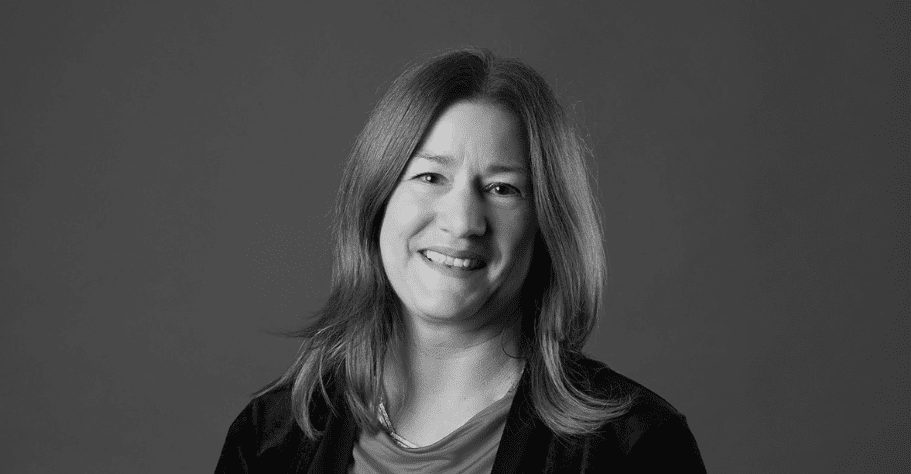
Joanna Lawrence | a partner @ Mills Oakley, Melbourne, Australia
According to Joanna Lawrence, a partner at Mills Oakley in Melbourne, Australia does not have a broad ‘fair use’ exception, unlike the U.S. Therefore, copyright licensing is required. But there should be clarity regarding what exactly the license covers aside from the type of licensing framework. “A license from a copyright owner to an AI developer to use the copyright work as an input for AI training may not extend to any outputfrom that AI model which reproduces the copyright work or a substantial part of it. What will be the AI developer’s obligations to the copyright owner or holder of moral rights or performers’ rights in that case, considering the output may be the result of instructions from an AI user, so not, strictly speaking, copyright infringement by the AI developer?” said Lawrence.
Further, Lawrence said that how the new licensing framework will apply to past use of copyright work for AI training must also be considered. “The reality is that a substantial amount of Australian copyright works will have already been used to train AI. The new framework will probably need a mechanism that enables copyright owners to identify if their work has been used in this way without their consent and to negotiate fair compensation for that use,” she explained.
The government is also considering a new enforcement mechanism for smaller copyright owners to deal with AI companies in case they don’t receive compensation for the use of their works. According to recent reports, American AI company Anthropic has told the government that its proposed multibillion-dollar investment for an AI infrastructure depends on greater certainty and clarity about how Australia’s copyright laws will operate, particularly where smaller rights holders are concerned.
Lawrence added that additional layers of protection are needed to preserve and protect First Nations cultural IP.
First Nations people refer to Aboriginal peoples and Torres Strait Islander peoples who hail from the Torres Strait Islands located between Papua New Guinea and Queensland. Together, they make up around 3.8 percent of the Australian population.
“The open letter emphasizes the broader cultural significance of Australia’s creative industry, particularly with respect to the protection of over 60,000 years of First Nations cultural heritage including songs, stories, images and languages, and observes that any framework which weakens the protection of the creative works of Australia’s First Nations people by allowing them to be absorbed into AI systems is ‘extractive, disrespectful and irreversible,’” revealed Lawrence.
The letter’s signatories, which numbered over 12,000, included songwriters, recording artists, authors, journalists, photographers, producers, visual artists, composers, screenwriters, playwrights and creative industry businesses.
- Espie Angelica A. de Leon