


LESI 2026: SuperMac’s win over McDonald’s highlights limits of EU trademark protection
30 April 2026
When SuperMac’s took on McDonald’s over trademark rights in Europe, the confrontation was widely framed as a David-versus-Goliath battle. What ultimately unfolded was not just a victory for an Irish fast‑food chain, but a landmark moment in European trademark law – one that underscored the “use it or lose it” principle at the heart of European Union intellectual property protection.
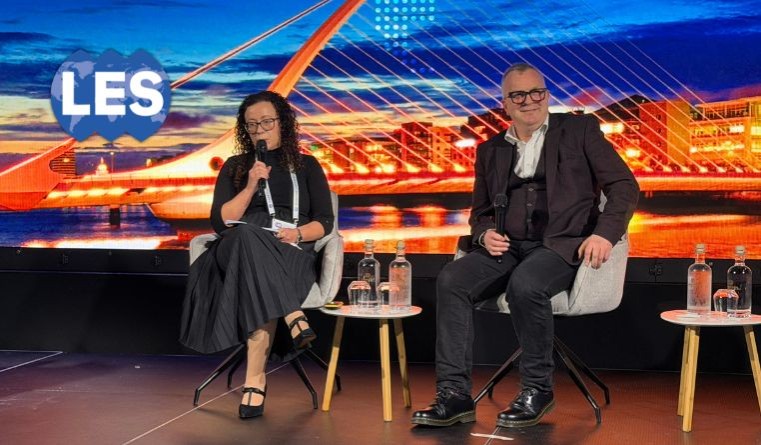
Founded in 1978 in Ballinasloe, County Galway, SuperMac’s had grown from a single outlet into a national brand with more than 118 locations and thousands of employees. As the company explored expansion beyond Ireland, trademarks became existential rather than administrative. “The brand itself was our biggest asset,” said Padraic O’Neachtain, PR and communications manager at SuperMac’s, speaking at the Licensing Executives Society International (LESI) annual meeting in Dublin, where he was joined by Tomkins IP partner Hazel Tunney.
How the dispute began
The legal conflict began in earnest in 2015 when SuperMac’s sought to register its name and logo as European Union trademarks to facilitate cross-border growth. McDonald’s opposed the application, arguing that “SuperMac’s” was confusingly similar to its globally famous “Big Mac.” That opposition succeeded in part, limiting the scope of SuperMac’s registration and delaying its European ambitions.
Rather than retreat, SuperMac’s escalated. In 2017, the Irish chain filed an application before the EU Intellectual Property Office (EUIPO) seeking revocation of McDonald’s Big Mac trademark in relation to certain goods and services, including chicken products and restaurant services. The claim rested on a fundamental rule of EU trademark law: if a mark has not been put to “genuine use” for a continuous period of five years, it can be cancelled.
Tunney described the strategic pivot bluntly: “Instead of playing defence, we went on the attack and required McDonald’s to prove use for everything they had registered.”
The evidence question
McDonald’s submitted extensive materials to demonstrate use of Big Mac, including advertising campaigns, promotional materials and documentation from multiple European markets. Initially, the EUIPO partially accepted those arguments, allowing McDonald’s to retain the trademark for certain meat products and restaurant services while revoking it for others.
SuperMac’s appealed. In June 2024, the General Court of the European Union sided with the Irish chain on key points, ruling that McDonald’s had failed to prove genuine use of the Big Mac mark for chicken sandwiches, poultry products and certain restaurant services, including drive-through and takeaway operations. The court found that McDonald’s evidence did not demonstrate sufficient volume, duration or frequency of use in those categories.
The ruling further narrowed the scope of McDonald’s trademark protection and confirmed that even the most recognizable brands cannot rely on reputation alone. As the court put it, the evidence “does not provide any indication of the extent of use” required under EU law.
Media attention and market impact
The decision reverberated far beyond intellectual property circles. Global media outlets framed it as a symbolic defeat for McDonald’s and a defining win for SuperMac’s. Pat McDonagh, SuperMac’s founder, described the ruling as a rebuke to what he called “trademark intimidation,” arguing that large multinationals should not be allowed to stockpile trademarks to block competitors.
For SuperMac’s, the practical impact was immediate. According to O’Neachtain, the case became an unexpected marketing asset. “People were coming into stores saying they’d heard about us because we’d taken on McDonald’s,” he said. Tourists sought out SuperMac’s outlets, while international franchising enquiries increased sharply.
The ruling also strengthened the company’s expansion hand. With McDonald’s Big Mac rights curtailed in key categories, SuperMac’s was freer to pursue trademark protection across Europe without the same legal roadblocks.
Lessons for brand owners
Legal commentators have widely treated the case as a cautionary tale. Analysts note that EU trademark law rewards active, provable use – not fame. “This decision reinforces that even iconic marks must be supported by robust evidence of commercial exploitation,” trademark specialists wrote following the ruling.
That message resonated at the LESI meeting. O’Neachtain urged startups to clear names early and document usage rigorously. Tunney echoed the point, stressing that “due diligence isn’t optional – it’s what protects your freedom to operate 10 or 20 years down the line.”
A defining chapter
Both speakers stressed that the case offers broader lessons for startups and growing brands. “Check the availability of your brand name before you fall in love with it,” O’Neachtain advised, warning that legal conflict can be costly if addressed too late. Tunney echoed the point, emphasising due diligence, clearance searches and long-term planning as essential components of brand protection.
Nearly five decades after Pat McDonagh opened his first shop, the trademark fight with McDonald’s has become part of SuperMac’s corporate identity. The chain now employs around 4,500 people and continues to explore international growth, supported by a stronger and better-defended IP portfolio.
As Tunney concluded, the case showed that “persistence and strategy matter” – not just in law, but in building a resilient brand capable of standing its ground against even the biggest names in global business.
- Darren Barton in Dublin