

LESI 2026: Annual conference opens in Dublin, highlights innovation and collaboration
28 April 2026
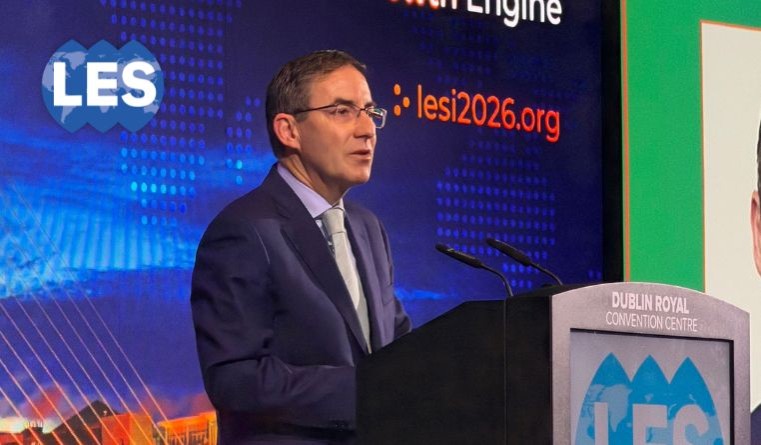
The Licensing Executives Society International (LESI) opened its annual meeting in Dublin with a reception welcoming delegates from across the global intellectual property and licensing community.
The event, held at the Dublin Royal Convention Centre from April 26 to 29, brings together industry leaders, practitioners and first-time attendees to explore emerging trends shaping the future of technology transfer and commercialization.
A highlight of the opening reception was a performance by the Banbh Irish Dance School, which entertained delegates with a display of traditional Irish dancing. The reception also provided an opportunity for guests to reconnect, build new relationships and engage in early discussions on issues shaping the innovation and licensing landscape. Dublin’s reputation as a centre for culture, business and technology offered a fitting backdrop.
The conference formally opened Monday, with more than 700 delegates from over 50 countries attending the opening session.
LESI president Jean-Christophe Troussel highlighted the scale and diversity of the global LESI community and encouraged engagement beyond the conference through its extensive committee structure, which spans industries including high technology, life sciences, energy, automotive, aerospace, chemicals and dispute resolution. Troussel noted that this collective expertise enables LESI to influence global discussions on licensing and IP while sharing practical knowledge across jurisdictions.
Delegates were formally welcomed by the host society, LES Britain & Ireland. President Samantha Williams introduced the conference theme, “Innovation to Impact: IP as an International Growth Engine,” and outlined a programme featuring plenary sessions, workshops and roundtables designed for a broad cross-section of the profession.
The opening session also featured senior external perspectives on the wider innovation ecosystem. Declan Hughes, secretary general at Ireland’s Department of Enterprise, Tourism and Employment, opened the conference on behalf of the Irish government, highlighting Ireland’s strong IP framework and the importance of effective licensing and commercialization in translating research excellence into market success.
Innovation and collaboration were further reinforced by contributions focusing on the role of patents as a bridge between invention and commercial impact. Emphasis was placed on the need for trust, legal certainty and professional standards to enable investment, particularly in deep-tech and research-driven sectors. Patents were described not simply as legal instruments but as market enablers that reduce risk, support collaboration and help ideas reach the market.
At the same session, European Patent Office (EPO) president António Campinos emphasized that innovation only delivers value when it reaches the market and that patents play a central role in building trust, reducing risk and enabling investment.
Campinos highlighted the benefits of patent protection, noting that European companies holding patents employ more people, generate higher revenues and pay higher wages than those without. He also outlined efforts by the EPO to improve efficiency, including reducing the average time from patent filing to final decision to just over three years and providing early assessments within months.
He pointed to closer collaboration between the EPO and LESI, with initiatives focused on strengthening professional standards, improving IP valuation tools and supporting small- and medium-sized enterprises (SMEs), universities and technology transfer organizations. He stressed that a connected innovation ecosystem is essential to move ideas from invention to real-world impact.
Speakers also highlighted ongoing efforts to strengthen the link between patents and business practice, including improved access to patent systems, faster examination processes and closer cooperation between institutions and practitioners. The importance of professional education, certification and IP valuation was underlined, alongside the need for practical tools to support SMEs, universities and technology transfer organizations.
The opening session concluded with a call for stronger collaboration – between professionals, institutions and countries – to translate innovation into real-world impact.
- Darren Barton in Dublin