

K-drama’s global success masks growing concerns over producers’ IP rights
11 November 2026
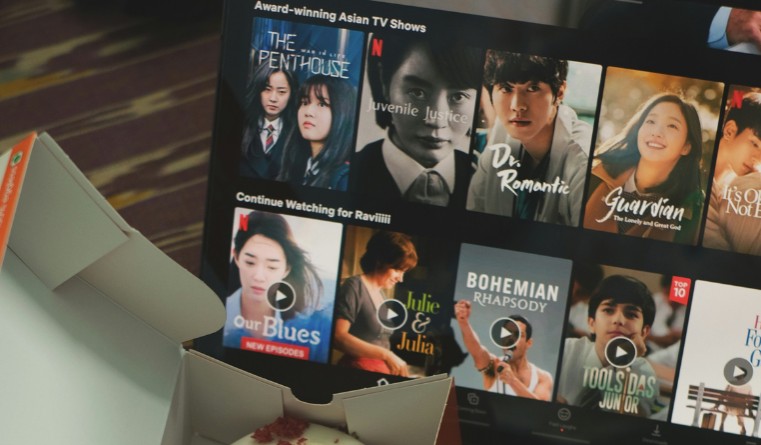
South Korea’s television drama industry is calling for urgent government intervention as production declines and companies struggle to capture the intellectual property value of their work in an increasingly streaming-dominated market.
Twelve industry groups, including the Korea Drama Production Association, Korea Drama PD Association and the Korea Television and Radio Writers Association, held a press conference at the Korea Press Centre in Seoul on November 4, urging the government and the National Assembly to establish a W1 trillion (US$746 million) mid- to long-term investment fund to support domestic drama production.
The groups warned that the country’s production base was at risk of collapse, citing rising production costs, declining investment capacity among traditional broadcasters and difficulties faced by production companies in retaining IP rights and securing subsequent revenue from their works.
The number of Korean drama productions fell from 141 titles in 2022 to about 115 in 2025, according to research by Korea IR Service cited by Reuters. Meanwhile, drama output from the country’s three major terrestrial broadcasters – KBS, MBC and SBS – dropped from 91 titles in 2012 to 32 in 2023.
The groups attributed much of the industry’s financial pressure to competition with global streaming platforms, including Netflix, whose substantial resources have intensified competition for talent and increased production costs. At the same time, declining advertising revenue has weakened broadcasters’ ability to finance new programmes.
Competition for leading actors has also contributed to rising production costs. A 2025 report by Korea IR Service identified pay for top-billed stars as the main driver of production costs, as streaming services compete for talent capable of attracting audiences. The groups also cited competition from short-form content and artificial intelligence, both for audiences and production.
These pressures raise a broader commercial question: whether production companies can earn sufficient returns from the content they develop and produce. The industry groups said companies often shoulder the risks of developing and producing dramas but struggle to retain ownership rights and secure revenue from subsequent exploitation of their work.
This is particularly significant as K-dramas reach an international audience through streaming services. Global distribution has expanded the commercial potential of Korean content, but the industry’s ability to benefit from the international demand depends partly on how rights and revenues are allocated between production companies and distribution platforms.
The downturn is also affecting creative professionals. Hae-young Park, chair of the copyright committee at the Korea TV and Radio Writers Association, said the decline in production opportunities had left assistant writers without work and was pushing creative talent towards other industries, including short-form and web-based content and games.
The groups warned that fewer productions would mean fewer opportunities for emerging writers, actors and production workers to develop their careers, potentially weakening the country’s creative workforce over time.
However, the difficulties identified by the industry groups may not extend across South Korea’s entire content industry. Yong-hee Kim, a professor of business administration at Sun Moon University, said the challenges largely reflected the decline of terrestrial broadcasting rather than the wider sector. Overall employment in the content industry increased to 693,090 in 2025, from 688,122 a year earlier, according to the Korea Creative Content Agency. Broadcasting employment, however, fell by 2.3 percent in 2024, according to a government survey.
The government’s proposed 2027 budget has added to industry concerns. Byung-jun Song, chairman of the Korea Drama Production Association, said that the proposed budget for the Ministry of Culture, Sports and Tourism’s broadcasting and video sector decreased by W4.5 billion, from W91.8 billion in 2026 to W87.3 billion in 2027. The Korea Media and Communications Commission’s proposed budget for promoting broadcast content also fell by W4.4 billion, from W16.8 billion in 2026 to W12.4 billion in 2027.
The industry groups are seeking a mid- to long-term policy response, including a W1 trillion investment and support programme, measures to restore annual production levels and assistance for mid- and low-budget productions.
The industry warnings highlight a key issue: international popularity does not necessarily translate into sustainable returns for the businesses and creators producing the content. Alongside financial support, greater clarity over IP ownership and the distribution of downstream revenues will matter for keeping South Korea’s drama industry healthy.
- Kristin Jerome Reyna